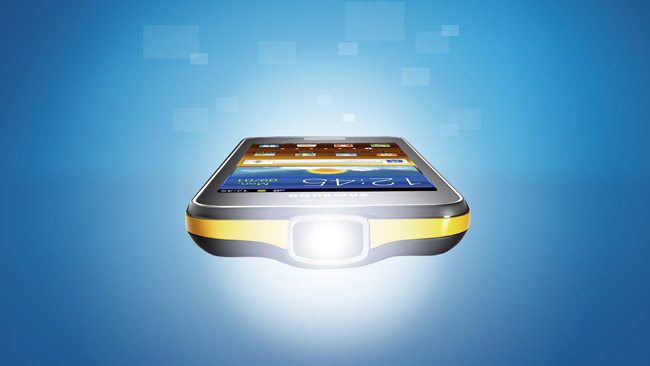
The sharp rise in smartphone sales will drive future growth in the pico projector market, as increasing consumer demand for the ability to watch videos, make presentations, and capture and view photos will fuel new technological breakthroughs.
According to a new report by GBI Research, pico projectors are following in the footsteps of HD video recording, Wi-Fi and Bluetooth technologies, which are now essential attributes on most smartphones. Using pico projectors in smartphones will allow individuals to view their applications on a larger screen, giving handset makers an edge in the ever-competitive market.
At the moment, advancements in laser technologies are needed to compete with LED light sources in pico projectors. The market leader in laser-based pico projectors, Microvision, relies on a complex green laser to create a full color image. However, this technology is costlier than red and blue laser diodes and less efficient than direct green lasers.
On the other hand, companies such as OSRAM, Nichia, Soraa, Sumitomo SEI and Corning are in the process of producing commercial direct green lasers using InGaN semiconductors with wavelengths in the 510-531nm range. Then again, compared to an LED light source, lasers are very costly and difficult to mass produce, though image quality is far superior. Technological advancements in the green laser market must therefore step it up in order to compete with LED-based pico projectors.
Overall, the global pico projector market generated revenues of around $0.49 billion in 2011 and is expected to grow at a colossal CAGR of around 75% during 2011-2016, to reach $8.12 billion in 2016…