By Simon Sage on Tuesday, October 20th, 2009 at 10:48 AM PST
In Casio, KDDI, Kyocera, Sharp, Sony Ericsson
Thirteen impressive new phones are coming down the pipe for Japanese service provider KDDI. Here’s the breakdown:
- Casio Exilim Keitei CA003: 12 megapixel camera with 3x optical zoom, autofocus, image stablizer, and 20 images/second rapid shot
- Sharp Aquos Shot SH003: 12 megapixel camera, FM transmitter, transfer and view Blu-Ray movies
- Sharp Aquos Shot SH006: 12 megapixel camera, Wi-Fi, GPS, transfer and view Blu-Ray movies
- Casio Exilim Keitei CA004: 8 megapixel camera with face detection, autofocus, and VGA video recording
- Sharp SH004: 8 megapixel camera with noise reduction and low-light filter; low-power mode and call noise-cancellation
- Sony Ericsson (NYSE: SNE) Bravia U1: 5 megapixel camera with autofocus and image stabilization; transfer and view Blu-Ray movies; waterproof
- Kyocera (NYSE: KYO) SA001: 3.2 megapixel camera with image stabilization; 14.7mm thin closed
- Toshiba (OTCPK: TOSBF) T003: 3.2 megapixel camera with autofocus, face detection, and image stabilization; waterproof
- Sharp SH005: 5 megapixel camera with autofocus and image stabilization; transfer and view Blu-Ray movies; waterproof
- Sony Ericsson S002: 3.2 megapixel camera with autofocus; GSM support
- Sony Ericsson Urbano Barone: 5 megapixel camera with autofocus and image stabilization; large keys for the elderly; transfer and view Blu-Ray movies
- Kyocera Mobile Easy K004: 2 megapixel camera with autofocus; easy-to-use UI
- Kyocera Mamorino: Security-centric, helps parents keep tabs on kids; waterproof
Oh yeah, and the vast majority have WVGA displays and infrared support. Man, it’s a whole other universe over in Japan. The Bravia-branded phone is pretty slick, and the only other time we’ve seen optical zoom on a 12 megapixel cameraphone was on the Samsung W880. Overall, a solid winter lineup from KDDI – I just wish we had something comparable over here.
[KDDI via MobileCrunch]
By Dusan Belic on Monday, August 24th, 2009 at 12:05 AM PST
In KDDI, Motorola
Motorola (NYSE: MOT)’s handsets unit may be suffering heavily these days, but their infrastructure business is a different story. On that note, the American company announced that they will help KDDI develop and implement LTE network, including RAN/base stations.
The Japanese carrier will deploy its LTE network in both 1.5GHz and 800MHz bands, and plans to offer commercial LTE services by December 2012, following a series of trials scheduled to begin in mid 2010.
Commenting on the news, Motorola Wireless Networks’ Bruce Brda said: “We are honored to be selected by our long-time customer KDDI to team with them in developing an innovative solution for their networking needs. Motorola is committed to bringing LTE to the market and delivering flexible solutions that help customers like KDDI accelerate the delivery of next-generation wireless access services in the most cost-effective manner possible.”
For the record, KDDI and Motorola have been building networks together in Japan for 20 years, and have introduced Japan’s first CDMA network “back in the days”…
By Stefan Constantinescu on Tuesday, July 28th, 2009 at 1:27 AM PST
In Japan, KDDI
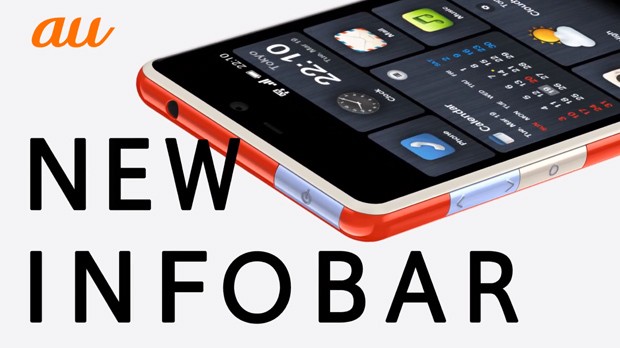
The au Design Project was created by Japanese operator KDDI in May 2001 because customers complained that they’re tired of seeing the same form factors, over and over again, with minor differences based on color and materials. They showed off three prototypes at launch, the info.bar, rotary, and wearable, and after much pressure they launched a device based on the info.bar concept in October 2003. Since then the au Design Project has been introducing more concepts and products. It’s been so successful that recently the infobar, talby, neon, and “media skin” designs have been added to a permanent exhibit at the New York Museum of Modern Art. Today three models have been added to the range, designed by Yayoi Kusuma, named “Happiness with Dots (pictured below),” “Doggie Ring-Ring (picture after the jump)” and “The groovy Hand Bag for Space Travel (pictured above).” You’ve got to love that. In Europe we’re still remembering 4 digit numbers, in America they have words with missing vowels such as RAZR, and in Japan they have whole phrases. The devices are going to go on sale July 30th and range in price from $1,000 to $10,000, with highly limited availability.
[Via: Wireless Watch Japan]
Read the full article »
By Will Park on Monday, July 13th, 2009 at 2:57 PM PST
In DoCoMo, KDDI, Research
Porn. Go anywhere in the world and you’ll find porn going strong. Go to Japan, however, and you you’ll find that mobile porn consumption is straining wireless data networks to the max. With more and more Japanese mobile subscribers opting for unlimited data plans, the mobile phone is starting to replace the desktop PC in porn consumption. In fact, the demand for mobile porn over 3G data networks has become so extreme that Japan’s top two wireless carriers, DoCoMo and KDDI, are looking to limit heavy data users in a bid to manage the load on their 3G networks.
It’s fitting that porn is forcing carriers to deal with data traffic surges. Porn was the deciding factor in the VHS vs. BetaMax format wars. Porn recently helped decide the Bluray vs HD DVD format war. Now, it seems porn is going to be the driving force behind wireless carriers’ management of unlimited data plans. “Pornography will eventually open a debate about how carriers should modify their business model as data traffic swells,” said Yusuke Tsunoda, telecommunications analyst for Tokai Tokyo Securities Co. “It may prompt even tighter access restrictions.”
As handsets become more advanced and wireless data networks get faster speeds, the mobile porn problem is only going to get worse. As it stands, some wireless subscribers have complained of slow or dropped data connections around midnight (hmm, why would that be?) on KDDI’s network. The surge in data traffic is simply too much for the Japanese carrier’s network to handle, despite the fact that Japanese wireless operators spent approximately $74 billion in infrastructure build-out costs since 2000.
It should be interesting to see how carriers react to porno-fueled traffic spikes and over-consumption on unlimited data plans. That “unlimited” data plan of yours is already capped to a handful of GB’s, we wouldn’t be surprised to see that carriers imposing more drastic caps in the near future. Let’s hope 4G LTE networks help alleviate the porno-bandwidth problem to some extent.
[Via: Bloomberg]
By Dusan Belic on Wednesday, May 13th, 2009 at 2:17 AM PST
In DoCoMo, General, KDDI, Softbank

Four Japanese mobile operators will spend 1 trillion yen ($10 billion) during the next five years to build a next-gen mobile network with faster Internet speeds.
According to Nikkei – NTT DoCoMo (NYSE: DCM), KDDI, Softbank (OTCPK: SFTBF) and Emobile will apply to the government for licenses for the new standard (LTE?) by May 7. DoCoMo plans to launch the new network during next year, while three other players will do the same between 2011 and 2012.
As for the rest of the world, we can only hope carriers elsewhere will follow the Japanese example and at least start planning their networks during the next year.
[Via: Bloomberg]
By Simon Sage on Monday, April 20th, 2009 at 6:40 AM PST
In Eco, KDDI, Sharp

Japan’s KDDI is getting on the eco-bandwagon by introducing a solar-powered, waterproof handset manufactured by Sharp. With only 10 minutes in the sun, you can squeeze out one minute of talk time and two hours of standby. KDDI beats Samsung’s Blue Earth to the market, but not ZTE’s Coral. Still, it’s a slick-looking handset, and combined with waterproofing, it’s potentially a great choice for the outdoorsy types, although some extra ruggedization would make it even more ideal for self-sufficiency. Expect more eco-friendly phones from KDDI’s Green Road Project lineup this summer.
[KDDI via CrunchGear]
By Dusan Belic on Friday, January 30th, 2009 at 3:56 AM PST
In Devices, KDDI, Sony Ericsson

Cry if you’re not in Japan. KDDI scored exclusive deal with Sony Ericsson (NYSE: SNE) to carry the company’s Japan-only S001 Cyber-shot handset. The super powerful slider looks great, and among other things comes with a large 3.3-inch WVGA (480×800) OLED screen ensuring beautiful colors, 8.1 megapixel camera with auto-focus, flash, smile shutter and protective lens cover. In addition, there’s 3G radio on board, Bluetooth, as well as GPS receiver. We couldn’t find WiFi on the list, but I guess that doesn’t mean much when you’re connected via cellular towers, like all the time.
As I said, it’s a Japan only device, which they [Japanese] can grab in either black, pink or green. All versions rock as you can see from the gallery bellow. I wonder when will Sony Ericsson figure we want such devices in the Western hemisphere, too…
[Via: Unwired View]
By Simon Sage on Thursday, January 29th, 2009 at 1:02 PM PST
In Gaming, KDDI, Mobile TV, New Hardware

Hitachi’s got some nifty dual-hinged, TV-enabled handset called the Wooo Ketai H001 now available, supporting 3D video viewing. You’ll probably need some big goofy glasses to make that work, but hey, you can pull off anything in Japan. KDDI is also showing off a bunch of other new handsets for their spring ‘09 collection , but this looks like the most interesting. Full specs include:
- 51 mm x 111 mm x 18.6 mm, 145 G
- 220 minutes talk time
- 260 hours standby
- 3.1 inch, 3D TFT display
- 5 megapixel camera with autofocus, flash and 8X zoom
- 30 FPS VGA video recording
- 500 MB internal memory with microSD support
- Bluetooth, Infrared
- 1SEG TV tuner
[via The Register]
By Dusan Belic on Monday, December 8th, 2008 at 8:07 AM PST
In Devices, KDDI, Sony Ericsson

Usually we see ultra hi-end handsets hitting portfolios of Japanese mobile operators and seeing the tiny Sony Ericsson (NYSE: SNE) Walkman Xmini hitting KDDI’s offering came as a surprise. It’s far from being a Japan-only ultimate handset with 8 megapixel camera and WVGA screen. Rather it’s a simplistic music-centric phone that seems designed for those that want to combine their Walkman MP3 player with a regular feature phone, but don’t like the bulkiness factor. That being said, the tiny Walkman Xmini sports a QVGA (320×240 pixels) screen, 4GB of on-board memory and dedicated music control keys. It measures 75×44x18 mm and it’s available in multiple colors to appeal to broader audience…
And that’s about all we can tell about the Xmini. We like it – in one sense, it’s like the Nintendo Wii of mobile phones. It’s not the features where the Xmini competes, but the overall concept. Any thoughts?
[Via: Engadget Mobile]
By Dusan Belic on Saturday, November 29th, 2008 at 6:12 AM PST
In Content, KDDI

In an ever growing battle of Japanese mobile operators, KDDI au is teaming up with Louis Vuitton to provide its customers an additional content free of charge — beautiful standy screens designed by Louis Vuitton. In order to grab these wallpapers, KDDI subscribers should snap an appropriate QR code and they’ll receive graphics designed by the famous French designers instantly.
Guess the fact that all three major carriers in Japan — DoCoMo, KDDI and SoftBank (OTCPK: SFTBF) — all offer great devices, prompted one of them to somehow differentiate its offering. Not exactly something that would made me switch a carrier, but then again I’m not a fashionista myself…
[Via: Engadget Mobile]