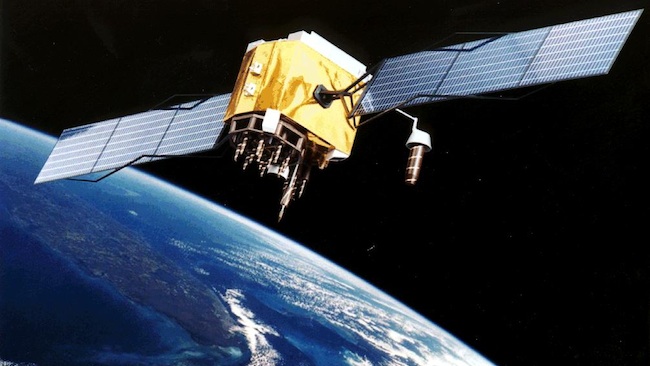
When we first heard about LightSquared back in September 2010 it seemed a bit too good to be true. Was a hedge fund, tired of the state of the American wireless market, really going to rock the boat by building a high speed 4G LTE network that they would then resell to companies? Initial tests of LightSquared’s LTE network showed that they caused massive interference with GPS signals, so much so that anything using GPS become unusable up to 22 miles away from a LightSquared cell tower. This obviously has many people concerned, most notably the men and women who fly airplanes and depend on GPS to figure out where in the sky they actually are and where the airport they’re trying to find is. Apparently the problem was easy to fix, all that needed to be done was to tune the frequencies used to ones that are a bit farther away from the same frequencies that GPS uses, that and to reduce the power output of LightSquared cell towers by over 50%.
Sanjiv Ahuja, LightSquared Chairman and CEO, says: “This is a solution which ensures that tens of millions of GPS users won’t be affected by LightSquared’s launch. At the same time, this plan offers a clear path for LightSquared to move forward with the launch of a nationwide wireless network that will introduce world class broadband service to rural and underserved areas which still find themselves on the wrong side of the digital divide.”
We’ve yet to see how fast LightSquared can run, but using the new found fact that they’re using 10 MHz worth of spectrum to build out their initial network, we can speculate that they’ll reach roughly 25 Mbps download speeds using 2x 5 MHz channels. That isn’t exactly the kinds of speeds we were hoping for, but we’ll see how they can compete on pricing.