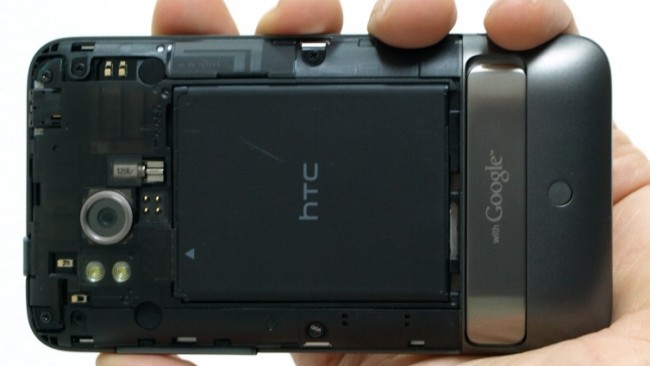
When Verizon launched their 4G LTE network back in late 2010 we wondered how long it would be until we saw the first 4G LTE smartphones hit their network? Three months later, in March 2011, we got our answer with the HTC Thunderbolt (pictured above, sans battery cover). Not long after that we were flooded by a wide range of 4G LTE phones available at nearly every price point. We also saw AT&T catch up and launch their own 4G LTE network last summer, but that’s a whole other story. Today we want to talk about voice and SMS and how the 4G LTE standard doesn’t support either of those. It’s a major problem that’s being solved in multiple ways, which is fragmenting the wireless industry that has traditionally prided itself on developing global standards. How is Verizon solving the voice and SMS problem? By keeping two radios on at the same time, meaning your 4G LTE smartphone is connected to Verizon’s 3G network and their 4G LTE network simultaneously. Need data? Make it go through the 4G LTE network. Want to make a call? Make it go through the legacy 3G network.
This obviously can’t go on forever since it translates to terrible battery life and a logistical nightmare for the poor people responsible for keeping Verizon’s network up and running, which is why Verizon has announced that they’re backing VoLTE. To put it simply, they’re turning voice calls into just another stream of bits that go over their 4G LTE network. Sources that have spoken to Light Reading say that Verizon is currently trialing VoLTE in two as yet to be named cities and has plans to roll out VoLTE nationwide at some point in 2013. Why is this important? Because Verizon has said that their 4G LTE network will have the same coverage map as their current 3G network at some point in 2013.
That brings up an importnat question: Will 2013 be the first year Verizon sells a phone without a CDMA radio inside, basically a pure 4G LTE phone? Something to think about as we head towards Mobile World Congress next month.