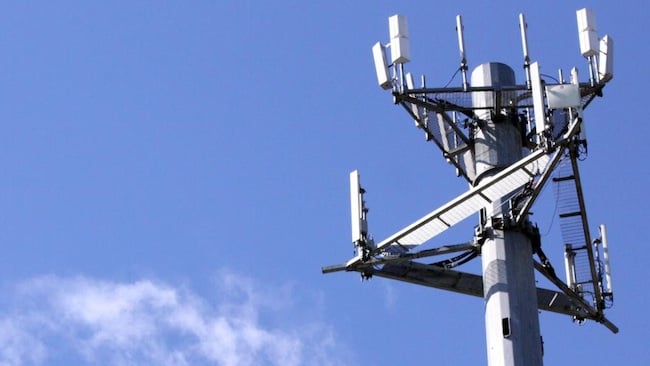
Japanese fixed line and mobile operator eAccess has just finished testing their soon to be launched 4G LTE network. What makes their 4G LTE special compared to say AT&T’s or Verizon’s 4G LTE is that eAccess is maxing out the technical capabilities of the LTE standard. They’re using 40 MHz worth of spectrum (2×20 MHz configuration) and devices with four antennas inside, which gives them up to 300 megabits per second down and 75 megabits per second up. That’s all theoretical though, in the real world users can expect to see something more like 75 megabits per second down and 25 megabits per second up. That’s still rather insane when you think about it. Now will device makers actually make smartphones and/or tablets with four antennas? Using today’s technology, that’s highly doubtful. The best we’re capable of delivering today is two antennas, which on a good day maxes out at 150 megabits per second down and 51 megabits per second up. That’s not too shabby either.
Looking ahead to the future, what’s after 4G LTE? Funny you should ask, because just last month we covered the International Telecommunications Union’s decision to ratify LTE-Advanced as the next big thing. We jokingly call it 5G, but semantics aside, it supports up to 100 MHz worth of spectrum and can deliver download speeds in excess of 1 gigabit per second. Last summer the engineers at Ericsson contructed a test network in Sweden and ran some benchmarks while driving around town in a van. They hit more than 950 megabits per second using just 60 MHz worth of spectrum!
Will we ever see this kind of speed in America? Looking at the way the current market is structured, with multiple players each competing against each other to build a nationwide network instead of working together, the answer is sadly no. That being said, there might be another spectrum auction at some point in the future, so things can change.
[Via: The Verge]