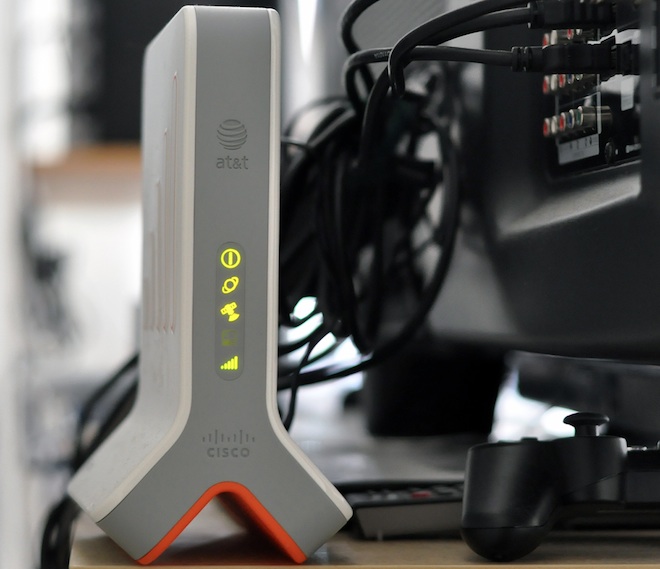

According to Informa Telecoms & Media a historial moment has been reached in the wireless space with femtocells outnumbering macrocells for the first time in the United States. Now what exactly does that mean? The word macrocell is just a fancy way of saying cell tower. Conservative estimates put the number of cell towers in the US at around 256,000. Femotcells on the other hand are devices that attach to your home broadband connection and give your home increased reception by acting as a baby cell tower. Verizon, AT&T and Sprint sell them, and they’re called the “Verizon Wireless 3G Network Extender“, “AT&T 3G MicroCell“, and “Sprint Airave” respectively. There are about 350,000 femtocells in customer’s hands right now and that number is expected to rise to over half a million by March 2011.
With increased network strain, and some customers simply being underserved by their operator in the area that they’re currently living, it’s no surprise that femtocells are becoming increasingly popular. What’s needed for even faster adoption is a change in business models. Right now in America you have to pay a huge up front fee to pick up a femtocell and to make matters worse there’s also a monthly fee that’s usually attached. If operators made these things free, took the initial burden of making them ubiquitous, then they wouldn’t have to complain about how stressed their networks are. Most people use their mobile phone while they’re at home anyway, so why waste precious resources?
Even better, since both AT&T and Verizon are in the television business, why not build this capability directly into set top boxes? With America and Europe both setting goals of what home broadband should be able to achieve, and how many people should have access to it, those high speed connections are going to waste if they’re used for nothing more than updating Facebook and Twitter.