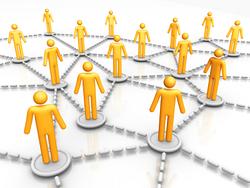
 Imagine becoming part of your mobile network. Everywhere you go, you’re helping improve and boost signals where they might otherwise be dead or non-existent. Now imagine that there dozens, maybe hundreds more around you that are doing the same thing. Sporting events and concerts or festivals like SXSW won’t be mobile dead zones anymore. Instead, they’d be strong mobile networks. How is this possible? Embeddable brain chips? Devices placed under our skin?
Well, it’s not as sci-fi as that, really. There are researchers at Queen’s University of Belfast who are working on making this technology happen. However, you being the human node doesn’t mean that you’ll have magical wireless transmission powers – it means your existing cell phone will (in addition to what it already does).
According to V3:
This would create a body-to-body network (BBN) that would allow phones to boost coverage by sending information between themselves before reaching a base station.
Dr Simon Cotton, from ECIT, explained to V3.co.uk that he envisions the sensors either being worn on the body, carried on smartphones or even integrated into clothing, and would bring improvements in a number of areas.
“It will provide a number of key benefits compared to cellular networks alone such as in disaster situations where cellular infrastructure has become damaged or is unavailable, body-to-body networks could help provide networking for relief workers and civilians,” he explained.
Basically, sensors will be carried by each one of us that will help boost mobile signal strength by communicating with each other before signals reach a base station. That way, if you’re in a fringe coverage area but there are tons of people between you and a cell tower, you should be fine in terms of coverage. Sounds like a decent future for mobile broadband if only it didn’t seem like it would exponentially increase our chances of getting cancer or radiation poisoning!
[Via: V3]