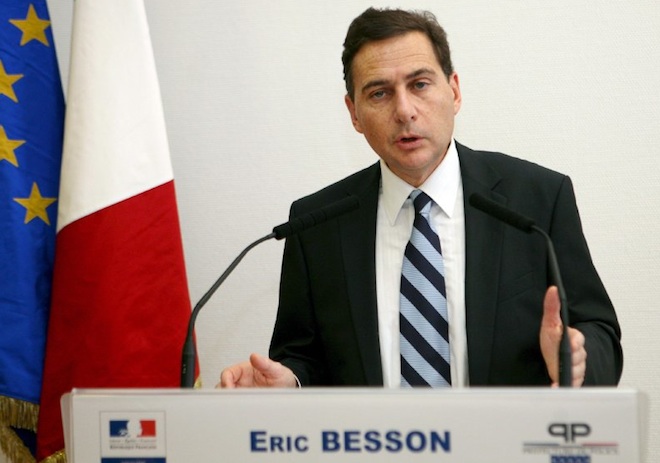

Both France and Switzerland are set to auction off their 800 MHz band, otherwise known as the digital dividend spectrum which was once used for analog television broadcasts, at some point in 2011. Their decisions are part of a broader effort by the European Union to ensure that the entire continent is blanketed with high speed wireless access using the same band in much the same way that America is going to be blanketed by LTE on the 700 MHz band. Eric Besson, Minister of the Digital Economy of France, says that there will be two sets of spectrum available for operators: 2x 5 MHz blocks and 2x 10 MHz blocks, both in the 800 MHz and 2.6 GHz bands. The larger the blocks, the more capacity and bandwidth an operator can provide. Switzerland on the other hand is going about things a bit differently. They’re going to auction off the 800/900/1800/2100/2600 MHz bands, but have yet to specify how much spectrum they’ll be selling in each respective band.
After Sweden and Norway became the first countries in the world to get a commercial LTE network up and running, the race for everyone else to catch up has officially begun. Germany recently launched their LTE network, and both Japan and America are due to do the same in December. High speed next generation networks are going to again change how we use our mobile devices, and one of LTE’s most desirable technical traits is the drastically reduced latency. Click on something and boom, it just happens. That’s going to enable things such as high definition video chat, multiplayer gaming, and improved web browsing. We’ve already heard TeliaSonera say that their average LTE user goes through over 15 GB of data per month, and that’s about what a normal person does with their home broadband connection.
In a few short years, thanks to operators and hardware makers, we’ll have wireless high speed broadband and wireless electricity. Let’s worry about the cancer later.