
Ofcom, think of them as the British version of the FCC, recently commissioned a study to find out what advantages 4G LTE offered compared to earlier 3G networks. Higher speed and lower latencies are something TeliaSonera users in Scandinavia and Verizon customers in America already know a thing or two about, with many going so far as to say that the mobile broadband experience they have with 4G LTE is better than their wired internet at home, but there’s one additional benefit that many glance over. The amount of traffic you can transmit using LTE is in some cases up to 230% greater than what you can do over existing 3G networks for the same amount of spectrum. That’s right, forget the spectrum crunch, if an operator wants to handle twice the amount of data, they just need to switch technology. Going forward, with LTE Advanced set to become a standard later this year, spectral efficiency skyrockets to as much as 450% compared to the networks of today.
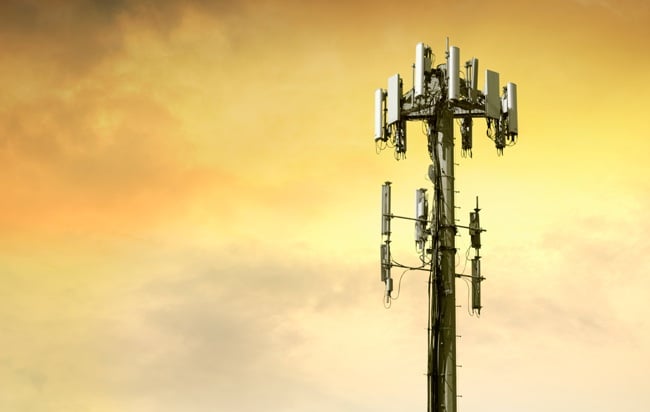
The study also looked at ways to make networks in dense urban areas perform more reliably and found that instead of throwing spectrum at the problem, a better solution is to deploy a larger number of small cell sites, instead of the massive cell masts that no one wants to see in their backyard.
Our favorite part of Ofcom’s massive 120 page report [PDF file], which admittedly we scrolled through in order to get the basics down, is a footnote on page 18 that reads: “In this report we use “4G” for LTE/LTE-Advanced & WiMAX/WiMAX 2 and “3G” for UMTS/HSPA/HSPA+. In other words, using their definition the only real 4G operators in America are Verizon and Sprint. T-Mobile and AT&T don’t count. That being said, if it were up to us we’d rather see these technical terms banished and see mobile broadband sold just like wired broadband is today, by the number of Mbps you want to pay for.