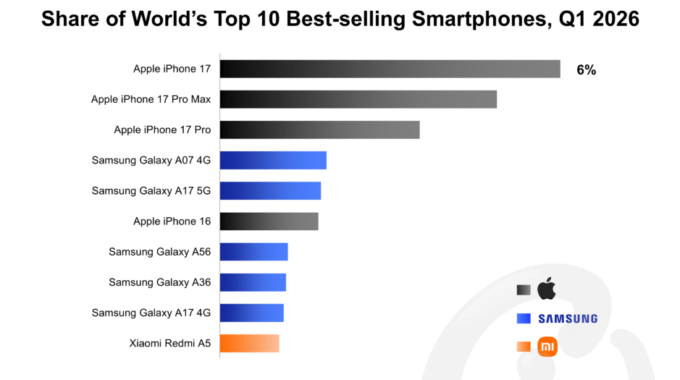
Apple’s iPhone 17 has claimed the crown as the world’s best-selling smartphone in the first quarter of 2026, capturing 6% of global unit sales. The achievement marks a significant milestone as the iPhone 17 series dominated the top three positions in global smartphone rankings.
The success comes at a time when the smartphone market faces ongoing challenges, with the top 10 devices accounting for an unprecedented 25% of global unit sales – the highest Q1 concentration ever recorded. This shift reflects changing market dynamics as consumers gravitate toward established brands while Android manufacturers struggle with rising component costs.
According to Counterpoint Research’s Global Handset Model Sales Tracker, the iPhone 17’s dominance stems from key upgrades that bring it closer to Pro variants. The device features higher base storage, improved camera resolution, and enhanced display refresh rates, delivering better value for mainstream consumers.
The iPhone 17 registered double-digit year-over-year growth in major markets including China and the United States, while South Korea saw a remarkable 3x increase. Following the standard model, the iPhone 17 Pro Max and iPhone 17 Pro secured the second and third positions respectively, offering advanced camera capabilities, improved battery life, and new color options.
Samsung maintained a strong presence with its Galaxy A series capturing five spots in the top 10. The Galaxy A07 4G emerged as the best-selling Android smartphone, performing particularly well in emerging regions like the Middle East, Africa, and Latin America. The device’s appeal lies partly in its six-year software and security update commitment, addressing consumer concerns about long-term device support.
Samsung’s 2026 flagship Galaxy S26 Ultra narrowly missed the top 10 despite showing stronger initial sales than its predecessor. The device introduces industry-first privacy display technology alongside enhanced AI features, positioning Samsung to compete in the premium segment.
Xiaomi rounded out the list with the Redmi A5 in tenth place, representing the most affordable option among the top performers. The device has maintained steady demand across emerging markets since its launch.
This market concentration trend reflects broader industry challenges that extend beyond simple consumer preference. An ongoing memory shortage has pushed up component costs, putting pressure on Android manufacturers in mass-market segments. This economic reality is reshaping how companies approach product development and market positioning.
The implications for the smartphone industry are significant. As market analysts predict continued decline in overall smartphone sales, the impact will likely hit mass-market segments hardest while premium devices continue gaining share. This dynamic is forcing manufacturers to reconsider their strategies, shifting focus from volume-based approaches to premium portfolio development.
The trend toward market concentration also highlights the increasing importance of brand loyalty and perceived value in consumer decision-making. As upgrade cycles lengthen and consumers become more selective, the ability to deliver meaningful improvements becomes crucial for maintaining market position.
Looking ahead through 2026, experts expect the top 10 smartphone models to further expand their share of global unit sales. This consolidation represents a fundamental shift in the smartphone landscape, where success increasingly depends on delivering exceptional value rather than simply competing on price or specifications alone.