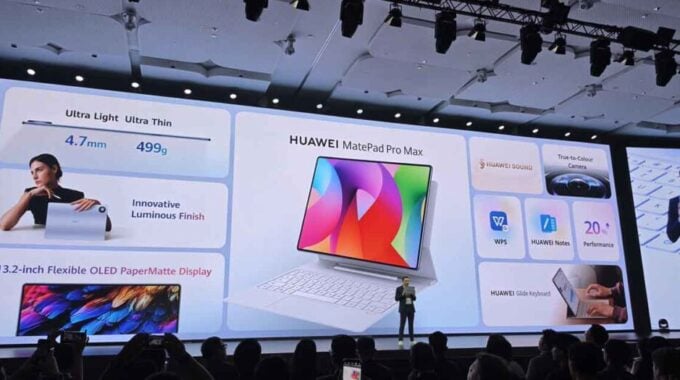
Huawei has claimed the title for world’s thinnest tablet with the launch of its MatePad Pro Max, measuring just 4.7mm thick. The device beats competitors including Apple’s iPad Pro and Samsung’s Galaxy Tab series in the race for slimmer form factors.
This matters because tablet makers have been locked in a fierce battle to create the most portable large-screen devices. While phones have plateaued in their thickness reduction, tablets still offer room for dramatic improvements. Huawei’s achievement puts pressure on Apple and Samsung to respond with even thinner designs in their next releases.
Despite its ultra-thin profile, the MatePad Pro Max doesn’t compromise on features. The 13.2-inch tablet weighs 499 grams and includes a 13.2-inch Flexible OLED screen with 3K resolution (3000 x 2000 pixels). The display offers 1600 nits peak brightness, DCI-P3 color gamut, and a 144Hz refresh rate.
The bezels around the screen measure just 3.55mm, making them among the thinnest on any tablet. Even with this slim design, Huawei managed to fit a 12MP front-facing camera that appears almost hidden in the frame.
The tablet’s standout feature is its PaperMatte display technology, which reduces glare by 99% and aims to reduce eye strain during extended use. This addresses a key complaint about tablets – that they’re uncomfortable for long reading or work sessions.
Other specs include:
- 50MP rear camera
- Six speakers with enhanced bass
- HarmonyOS 4.3 with Kirin processor
- 12GB RAM with 256GB or 512GB storage options
- 10400mAh battery (9760mAh in Europe) with 66W fast charging
- Up to 14 hours of video playback
The device supports Huawei’s Glide Keyboard and stylus for productivity tasks. The company positions this as a laptop replacement, continuing the industry trend of tablets targeting traditional PC users.
Huawei offers the MatePad Pro Max in Shimmery Blue and Space Gray colors. The tablet starts at €1399 for the 256GB model with cover, rising to €1649 for the 512GB version with keyboard included.
This launch represents Huawei’s continued push in the premium tablet market despite ongoing restrictions on its smartphone business in many Western markets. Tablets remain one area where the company can still compete directly with Apple and Samsung on the global stage.