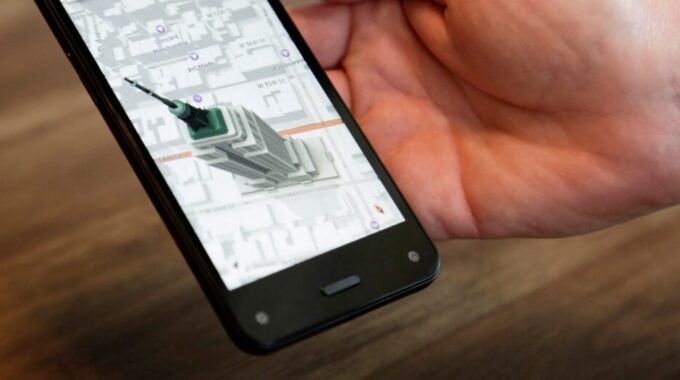
Amazon is taking another shot at the smartphone market, more than a decade after its Fire Phone became one of the company’s most notable failures. The e-commerce giant is developing a new device codenamed ‘Transformer’ that aims to serve as a mobile gateway to Amazon’s vast services ecosystem.
The project represents Amazon’s latest attempt to realize founder Jeff Bezos’ long-held vision of ubiquitous voice-driven computing. According to Reuters, the phone is being developed within Amazon’s devices and services unit and is designed to sync with Alexa while providing personalized access to Amazon’s shopping, streaming, and delivery services throughout the day.
The timing reflects broader industry trends as tech giants race to integrate AI into hardware devices. While companies like Apple, Google, and Meta develop AI-embedded glasses and wearables, Amazon sees an opportunity to differentiate itself through its existing services ecosystem and data-driven customer insights. The company’s AWS cloud dominance and recent Alexa overhaul position it uniquely in the AI hardware space.
Amazon’s Transformer project centers on AI integration that could eliminate traditional app stores entirely. Instead of downloading and registering for applications, users would access services through AI-powered interfaces. Key features being developed include:
- Deep integration with Alexa voice assistant
- Streamlined access to Amazon.com shopping
- Native Prime Video and Prime Music integration
- Enhanced food ordering through partner services like Grubhub
- AI-powered personalization based on purchase history and preferences
The project is being led by Amazon’s year-old ZeroOne group, headed by former Microsoft executive J Allard, who previously worked on the Zune music player and Xbox gaming console. The group’s mandate is to create ‘breakthrough’ gadgets that can reverse years of unprofitability in Amazon’s devices division.
Amazon is exploring both traditional smartphone and ‘dumbphone’ approaches. The minimalist Light Phone has served as inspiration for the latter option – a $700 device with basic features like camera, maps, and calendar but no app store or web browser. This approach could position Amazon’s device as a secondary handset rather than a direct iPhone or Samsung Galaxy replacement.
The strategy makes sense given market realities. Feature phones and dumbphones captured 15% of global handset sales in 2025, driven by consumers seeking digital wellness and parents wanting controlled access devices for teenagers. Amazon could market its phone to these segments while avoiding direct competition with established players.
However, significant challenges remain. Amazon’s original Fire Phone launched in 2014 with similar ambitions but failed spectacularly. The device featured camera-based shopping tools and 3D displays but suffered from poor battery life, overheating issues, and lack of popular apps. Amazon ultimately canceled the phone after 14 months, taking a $170 million charge on unsold inventory.
The current smartphone market presents additional hurdles. Apple and Samsung control about 40% of global sales, and consumers show strong loyalty to existing app ecosystems. Industry analyst Colin Sebastian from R.W. Baird notes that Amazon ‘will have to give consumers a compelling reason to switch phones and people are pretty attached to existing app stores.’
Market conditions also pose challenges. Smartphone shipments are expected to decline 13% in 2026 – the biggest drop ever – as rising memory chip prices increase device costs. This makes it particularly difficult timing for new market entrants.
The broader AI hardware landscape offers mixed signals for Amazon’s prospects. Recent AI-native devices like the Humane AI pin and Rabbit R1 assistant failed commercially despite attempting similar app-free approaches. Both suffered poor reviews and the Humane pin was discontinued entirely.
Yet Amazon brings unique advantages to the space. Francisco Jeronimo from International Data Corporation notes the company ‘brings together a powerful services ecosystem spanning commerce, content, cloud, and an existing AI foundation with Alexa, along with deep expertise in data-driven customer engagement.’ However, he warns ‘the window of opportunity is tiny’ as every major tech company moves toward AI-embedded devices.
The timeline for Amazon’s smartphone project remains unclear, and sources caution it could be scrapped if strategy shifts or financial concerns arise. The company has not yet approached wireless carrier partners, suggesting the device is still in early development stages.
For Amazon, the smartphone represents more than just hardware sales. Success could provide the company with valuable mobile user data that complements its existing customer insights from e-commerce and content consumption. This data advantage could strengthen Amazon’s position in AI development and personalized services.
The project also fits Amazon’s broader push to expand Alexa’s reach beyond smart home devices. After a multi-year AI overhaul, Alexa relaunched in 2025 as a core component of Amazon’s consumer-facing AI strategy. A smartphone could accelerate customer adoption of AI services while providing Amazon with continuous engagement touchpoints throughout users’ daily routines.