Smartwatches have come a long way from simple step counters, and Google wants Wear OS 7 to reflect that. The update, which started rolling out to eligible Pixel Watch devices on June 16, 2026, focuses on making your watch more useful in the moments when pulling out your phone feels like too much effort.
The numbers behind the update tell an interesting story. Google says more than half of Wear OS users wear their watch every single day of the week, and the most dedicated users keep it on for over 23 hours a day. That kind of usage puts pressure on software to be reliable, fast, and genuinely helpful around the clock.
Google has announced four headline changes with Wear OS 7, along with a bigger AI-powered update coming later in 2025 for select devices. Here is what to expect.
Live Updates bring real-time information to your wrist
The most immediately useful addition is Live Updates, which brings Android’s Live Updates system directly to the watch face. Instead of tapping through apps, you can track ongoing events at a glance. Google gives a few examples of what that looks like in practice:
- A live sports score during a game
- Your food delivery arrival time
- Workout progress while you are moving
It is a small change with a practical payoff. The watch is already on your wrist, so surfacing time-sensitive information there, without requiring any interaction, makes sense.
Your watch becomes a remote control for other devices
Wear OS 7 is built to work more closely with the other gadgets in your life, not just your phone. That includes earbuds and, notably, Google’s upcoming smart glasses, which are expected to launch this fall.
The integration with audio glasses is a good example of what this looks like. If you take a photo using a pair of compatible glasses, you can review the shot directly on your watch without reaching for your phone. It is a small convenience, but it points to a broader idea: the watch as a control hub for a connected set of devices.
The media output switcher is another piece of this. You can control playback across headphones, home speakers, and other audio devices from your wrist, and switch audio between them without opening your phone.
Gemini AI is coming to Wear OS, but not quite yet
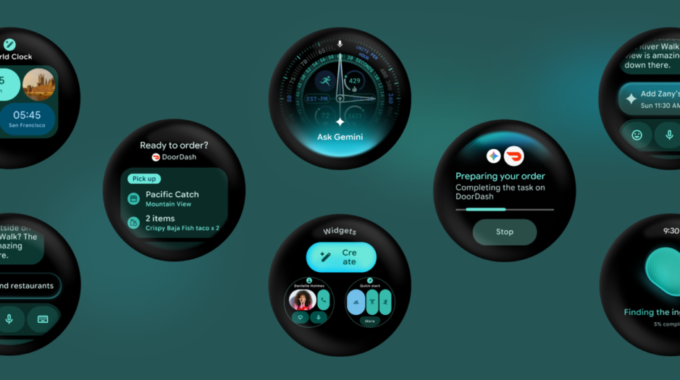
The bigger headline, at least on paper, is Gemini Intelligence. Google says select Wear OS 7 devices will receive these features later this year. What is included:
- Create My Widget: Build custom watch face dashboards using plain language instructions
- Multi-step app automation: Ask Gemini to complete tasks like booking a spin class or placing a restaurant order
- Personal Intelligence: The assistant can reference your Gmail, Search history, and past conversations to give more relevant suggestions
- Neural Expressive design language: A new visual style rolling out across the Gemini experience on watch
The automation features are the most ambitious part of this. Getting Gemini to handle multi-step tasks directly from a watch, with a small screen and no keyboard, is a harder problem than doing it on a phone. Whether it works smoothly in practice is something reviewers will need to test once the features actually arrive.
Battery life gets a modest bump
Wear OS 7 also includes system-level power optimizations that Google says will improve battery life by up to 10% for users upgrading from Wear OS 6. That is not a dramatic leap, but for a category where all-day battery is often the difference between a watch people actually wear and one they leave on the charger, any improvement counts.
The rollout to eligible Pixel Watch devices starts today, with the Gemini Intelligence features following later in the year.