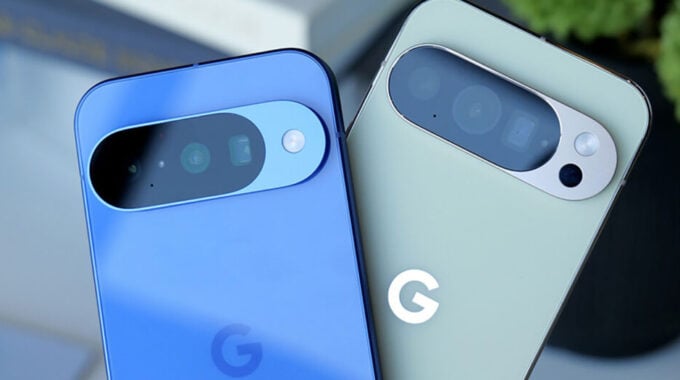
Google is throwing a party on August 12, and honestly, the most exciting thing on the invite might be a blinking light strip. That’s not a knock — it’s just the reality of what the leaks are telling us ahead of the next Made by Google event. According to Engadget, the Pixel 11 series is shaping up to be an incremental update, and you’re going to pay more for it. Fun times.
Let’s start with the phones themselves. Four models are expected: the Pixel 11, Pixel 11 Pro, Pixel 11 Pro XL and Pixel 11 Pro Fold. If the leaks are right, the basic designs are basically identical to the Pixel 10 lineup. Same shapes. Same screen sizes. Same resolutions — a 6.3-inch panel on the base and Pro, a 6.8-inch on the Pro XL, and a 6.3-inch outer display with an 8-inch inner display on the Fold. Don’t go expecting a big visual refresh.
So what actually changes? Colors, mostly. The base Pixel 11 is rumored to come in Midnight, Fuchsia and Moss. The Pro gets Dune, Pine and Sterling. The Fold appears to be sticking with Midnight and Pine. New colors are fine, but they’re not exactly a reason to upgrade your phone.
There is one genuinely interesting rumor though. Google may be adding something called Pixel Glow — an RGB LED array near the rear camera bar. It’s reportedly inspired by the Nothing Phone’s Glyph interface, and could pulse when you’re chatting with Gemini or flash color-coded alerts when your phone is face-down. In a year that looks light on big changes, a feature like this could end up being the headline. That’s either charming or a little sad depending on your expectations.
Under the hood, the Pixel 11 series is expected to run on the Tensor G6, built on TSMC’s 2nm process, the same node Apple is reportedly using for the next iPhone. Mystic Leaks (via 9to5Google) claims it’ll use a seven-core setup with an ARM C1-Ultra core clocked at 4.11GHz, a PowerVR GPU, Google’s Titan M3 security chip and a MediaTek M90 modem. Real-world performance is impossible to predict from specs alone, but 2nm should mean better efficiency and cooler thermals. Google will absolutely make a big deal about this at the event.
Camera-wise, the base model and Fold are rumored to step up to a 50-megapixel main sensor, up from 48MP on the Pixel 10. The Pro models could see updated main and telephoto sensors too, though exact specs haven’t leaked. Google’s camera software has always done heavy lifting, so even modest hardware upgrades tend to matter. Expect a lot of AI photography talk on stage.
Now for the part that stings. The entire Pixel 11 lineup is reportedly getting pricier, partly because of rising memory costs. The base models will reportedly drop the 128GB option and start at 256GB — but at the same price as the 256GB Pixel 10 option, effectively pushing the entry price up. The Pro XL and Pro Fold are expected to get a straight 100 euro price increase in Europe, which usually signals a similar bump for US buyers. A price hike on top of a minor upgrade cycle is a tough sell, and Google knows it. That’s probably why you can expect a wave of exclusive AI features for Pixel 11 to soften the blow a bit. Android 17 is coming too, obviously.
The Pixel Watch 5 is also expected at the event. It’s getting four new color options, including a matte black, a silver with porcelain band, a matte gold with sage green band and a polished gold with coral band. But the hardware looks largely unchanged. It will launch with Wear OS 7, which adds Android Live updates, better connected device controls and Gemini integration. Pricing is reported at $399 for the 41mm and $429 for the 45mm, with cellular bumping things up to $499 and $529 respectively. That’s a noticeable jump from the current Watch 4 pricing.
The bigger picture here is that Google, like most phone makers right now, is dealing with rising component and memory costs while trying to keep consumers interested in annual upgrades. The Pixel line has built genuine loyalty through software and camera quality, but that goodwill only stretches so far when prices keep climbing and the hardware barely changes. August 12 will tell us whether Google has something up its sleeve or whether this is exactly the modest, more expensive upgrade year the leaks are pointing to.