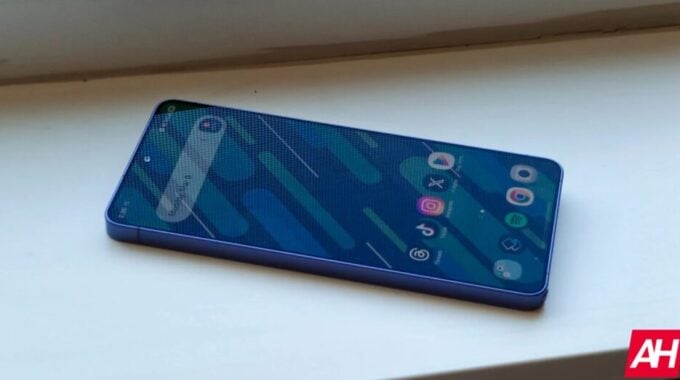
Scratch resistance is old news. If this rumor holds up, Samsung is about to make it obsolete. According to a report from Android Headlines, the Galaxy S27 Ultra could debut a brand-new Gorilla Armor coating that doesn’t just resist micro-scratches, it actually recovers from them.
The tip comes from @phonefuturist, also known as Schrodinger, a leaker who claims Samsung and Corning are co-developing a self-healing surface coating for the next generation of Gorilla Armor. The idea is that instead of trying to make glass so hard that nothing can scratch it, which has clear physical limits, the coating would allow the surface to bounce back from the kind of shallow, everyday scratches that slowly make your screen look like frosted glass over time.
If accurate, Samsung may even swap out its marketing language to match. The tipster says the company could move away from calling it “scratch resistance” and start using “scratch recovery” instead. That’s a small wording change with a pretty big implication behind it.
For context, the original Gorilla Armor made its debut on the Galaxy S24 Ultra back in 2024. It came with an anti-reflective coating that genuinely worked well, and the Galaxy S25 Ultra and S26 Ultra both stuck with the follow-up Gorilla Armor 2. So this next version would be the third generation, and it sounds like the most ambitious one yet.
Why does this matter? Because micro-scratches are a real and annoying problem that basically every flagship owner without a screen protector knows well. Screen protectors help, but they come with their own issues, including that slightly raised edge you feel every time you swipe near a corner. A display that fixes itself sidesteps all of that.
The Galaxy S27 Ultra is expected to arrive in early 2027, alongside the standard S27, S27 Plus, and S27 Pro. But here’s the catch: the self-healing coating, if it exists, will almost certainly be exclusive to the Ultra at launch. The original Gorilla Armor never made it to other phones in the lineup, and Gorilla Armor 2 followed the same pattern. So don’t hold your breath if you’re planning to buy anything other than the top model.
Still, if this technology works as described, the pressure on the rest of the industry will be real. Apple, Google, and everyone else would have a compelling reason to push Corning or develop their own answer. And that kind of competition is good for everyone who just wants a phone that doesn’t look scratched up after six months.