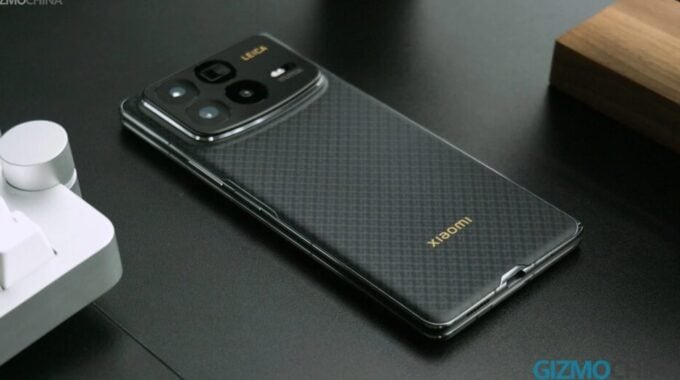
Xiaomi is splitting up its biggest phones of the year, and honestly, that’s the right call. CEO Lei Jun has confirmed that the Xiaomi 18 Fold and the Xiaomi 18 Pro series will launch at separate events in September, giving each device its own moment in the spotlight. When you have two phones running completely different chips, that separation actually makes sense.
The month kicks off with the Xiaomi 18 Fold alongside the SkyNomad SUV lineup, which is Xiaomi’s family-focused electric vehicle range built on the Kunlun platform. Yeah, Xiaomi makes cars now. The Xiaomi Pad 9 Pro Max is also expected to show up at that same event, though Lei Jun didn’t mention it directly. Both the 18 Fold and the Pad 9 Pro Max are powered by Xiaomi’s in-house XRING O3 chip, which has been making some serious noise lately.
And the XRING O3 has the numbers to back up that noise. It reportedly scored 5.22 million points on AnTuTu, which makes it the first smartphone chip to cross the 5 million mark. It’s built on a 3nm process, packs 24 billion transistors into a 133mm² die (that’s 26% larger than the previous XRING O1), and its 10-core CPU cleared 15,000 points in multi-core testing. The new G2-Ultra NX GPU also claims 85% better graphics performance while using 64% less power. Those are big claims, and we’ll see how they hold up in real-world use, but on paper this chip looks genuinely impressive.
Then, toward the end of September, the Xiaomi 18 Pro series arrives with a completely different chip story. It’s expected to run on Qualcomm’s Snapdragon 8 Elite Gen 6, which moves to a 2nm manufacturing process. The previous generation used 3nm, and the jump to 2nm typically brings around 30% more transistor density. That means better performance, more efficiency, and more consistent speeds when you’re pushing the phone hard for extended periods. So while the 18 Fold is Xiaomi’s showcase for its own silicon, the 18 Pro is placing its bet on Qualcomm’s latest.
The 18 Pro series is also expected to support 100W wired charging, the N79 5G band, and UWB connectivity. None of those are jaw-dropping on their own, but together they round out a pretty complete spec sheet for a 2026 flagship.
What makes September so interesting for Xiaomi is the sheer volume of what’s dropping. You’ve got:
- The SkyNomad SUV lineup, Xiaomi’s latest move in the EV space
- The Xiaomi 18 Fold, its first foldable phone powered by the XRING O3
- The Xiaomi Pad 9 Pro Max, also running XRING O3
- The Xiaomi 18 Pro series, powered by Snapdragon 8 Elite Gen 6
This is also a broader signal about where Xiaomi is heading. The company is no longer just another Android phone maker chasing Qualcomm. Building its own chip and launching a competitive foldable in the same month as a Snapdragon flagship shows real ambition. Apple and Samsung have long used in-house silicon as a competitive edge. Xiaomi is clearly trying to build that same kind of independence, and the XRING O3’s specs suggest it’s making real progress. Whether that translates to a better phone experience in day-to-day use is the real test, and September can’t come soon enough.