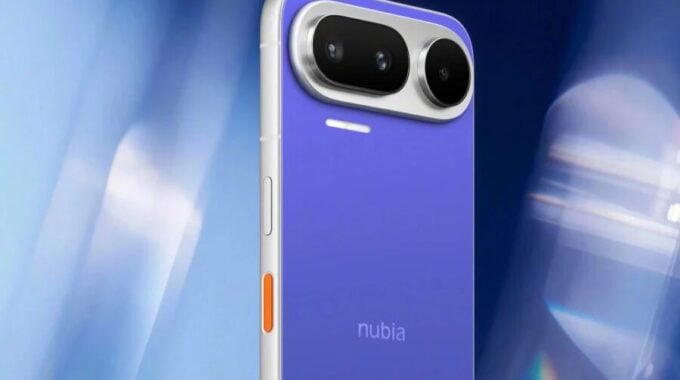
Nubia’s first AI phone sold out fast, then hit a wall when major Chinese apps started blocking what the AI could actually do. So naturally, they made another one. The NaviX Ultra has just launched in China, and this time around, Nubia is going harder on both the hardware and the software side of the AI experience.
The phone is built around ByteDance’s Doubao Mobile Assistant, which is now in its consumer release after a technical preview last December. The idea is simple enough: you say what you want done, and the assistant figures out how to do it across multiple apps without you tapping through each one manually. Book a ride, check your calendar, start a meeting note. One sentence, done. Whether it actually works that smoothly in real life is a different question, but the ambition is clear.
The most talked-about hardware detail is the dedicated AI button, finished with orange accents and pulling double duty as a fingerprint sensor. Nubia calls this an industry first, and it’s hard to argue. The button is positioned for one-handed reach, wakes on voice, and runs on Seed’s full-duplex voice model. That last part matters because you can interrupt the assistant mid-response instead of waiting for it to finish speaking. It actually behaves more like a conversation. Nubia also claims a 48% higher wake-up rate in noisy environments like subway stations, plus 21% better sentence recognition. The assistant supports over ten dialects, including Cantonese and Minnan.
Beyond voice, the AI can read your screen and understand what the camera sees. Point it at a product in a store and get information. Ask it about something on your display. Use it during a video call to process what the camera is picking up. These are the kinds of features that look great in a demo, and the real test is how well they hold up when the lighting is bad and the background is noisy.
Here’s what the NaviX Ultra is working with on the hardware front:
- Qualcomm Snapdragon 8 Elite Gen 5 chipset
- 200-megapixel main camera
- 50-megapixel ultra-wide camera
- 64-megapixel periscope telephoto camera
- 7,100mAh battery
The AI features don’t stop at the main assistant. The phone can spot a product on your screen and pull up a shopping page. It can handle incoming calls with custom response scripts, queue multiple tasks in the background, and sort important notifications so they don’t get buried. It also works with third-party services like Cao Cao Mobility for ride booking and Lark for scheduling and note-taking. For meetings, the assistant can record, transcribe, and summarize using Lark Notes, and you can search back through the content using plain language instead of scrubbing through a full transcript.
Privacy is also part of the pitch. Nubia says the NaviX Ultra is the first device to complete registration for its intelligent agent large model with Chinese regulators. There are lock-screen permission controls and international security certifications included. Given the backlash the original phone faced when apps started restricting AI access, Nubia clearly understands that trust is part of the product now.
The bigger picture here is that Chinese manufacturers are racing to figure out what an AI-first phone actually looks like in practice. Nubia’s first attempt showed there was real consumer interest, even if the software ecosystem wasn’t ready. The NaviX Ultra is a bet that both the hardware and the platform have caught up. Pricing and wider availability details are still coming, but for now, this is one of the more complete attempts at making AI the actual center of a phone, not just a feature buried in settings.