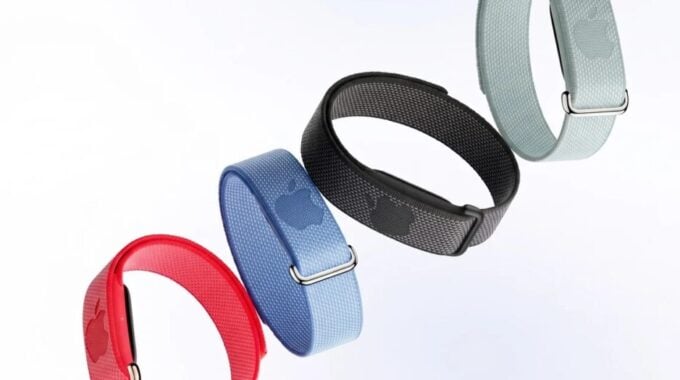
What if Apple’s next big wearable has no screen at all? That’s not a hypothetical. According to Android Headlines, Apple is actively prototyping a dedicated screenless fitness tracker, a stripped-back wrist device designed to go head-to-head with Whoop and Google’s recently launched Fitbit Air. No app store. No notifications. Just pure, continuous health tracking on your wrist.
Early prototypes ditch the iconic glass display entirely. In its place is a flexible fabric strap with a sensor-packed computing module attached. The goal is clearly to target the kind of user who finds the Apple Watch too noisy, too distracting, or too demanding to charge every night. Bloomberg’s Mark Gurman first surfaced internal details, and the names backing this project make it hard to dismiss. Tim Cook is aware of it. Eddy Cue, who took over Apple’s health division late last year, is personally championing it. This isn’t some skunkworks side project nobody cares about.
The market clearly got the memo. Garmin’s stock dropped 2.5% during trading hours right after news of the prototype leaked. That kind of reaction tells you investors understand what it means when Apple starts circling your territory.
The timing makes sense when you look at what’s happening across the wearables space. Whoop has built a loyal following among serious athletes who want recovery data without the screen glare. Oura has made the ring format mainstream. Google’s Fitbit Air is pushing the minimalist angle hard. And specialized players from both ends of the market are eyeing public offerings. The demand for focused, distraction-free health hardware is real and growing fast. Apple sees that, and it’s moving.
To get this thing built, Apple pulled engineers from its Vision hardware group, the same team responsible for Vision Pro, smart glasses, and camera-equipped AirPods. That’s a serious signal. These aren’t generalist engineers being handed a side project. Bringing in Vision Pro talent suggests Apple wants the sensor tech on this device to be genuinely impressive, not just a marketing checkbox.
There’s also a leadership angle here worth understanding. Over the past year, Jeff Williams, Stan Ng, and Jay Blahnik all left Apple. That’s a significant chunk of institutional knowledge walking out the door. Eddy Cue stepping into the health division isn’t just a reshuffle. It’s a reset, and this screenless band looks like one of his early bets on where consumer health hardware is heading.
Still, the project is early. Apple describes it as a technology exploration phase, which is corporate speak for “we like this idea but haven’t committed to shipping it.” A commercial launch isn’t expected before 2028, and it could be scrapped before it ever reaches that point. Apple kills more products than it ships.
But even if this specific device never makes it to a store shelf, the direction is telling. Apple has already been updating watchOS and the Health app with features that look a lot like Whoop’s playbook: daily readiness scores, advanced heart-rate tracking, biological age estimations. The software is moving in this direction whether or not the hardware follows.
Here’s what the bigger picture looks like:
- A screenless band would let Apple target health-focused users who don’t want a mini smartphone on their wrist
- It would compete directly with Whoop, Fitbit Air, and Oura without cannibalizing Apple Watch sales
- Vision Pro hardware engineers bring serious sensor credibility to the project
- A 2028 target lines up with a broader Apple Watch lineup overhaul
- Software groundwork is already being laid in watchOS and the Health app
Apple going after the screenless fitness band market isn’t a gimmick. The company rarely builds hardware in a category without a credible plan to own it. Between the foldable iPhone Duo, leaked smart glasses, and now this, Cupertino is clearly not content to let the next wave of personal tech get away from them. Whether this specific band ships or not, Apple’s ambitions in health hardware just got a lot more interesting.