Most fitness tracking features on smartwatches are just repackaged versions of the same stuff we’ve seen for years. Heart rate zones, step counts, sleep scores. But Oppo’s new Watch S2 has one feature that caught my attention, and it’s not the display or the design. It’s the fat-burning tracker.
Oppo launched the Watch S2 alongside its new Find X10 smartphones, and the watch is clearly built around a fitness-first identity. The star of the show is something called FatMax. Instead of throwing generic heart-rate zones at you, FatMax calculates a personalized target heart rate based on your height, weight, resting heart rate, and VO2 max. During a workout, the watch nudges you in real time to stay in that specific zone. It also estimates how many grams of fat versus carbohydrates you’re actually burning. That’s a level of specificity most smartwatches don’t bother with, and it could make a real difference for people who are serious about body composition and not just hitting step goals.
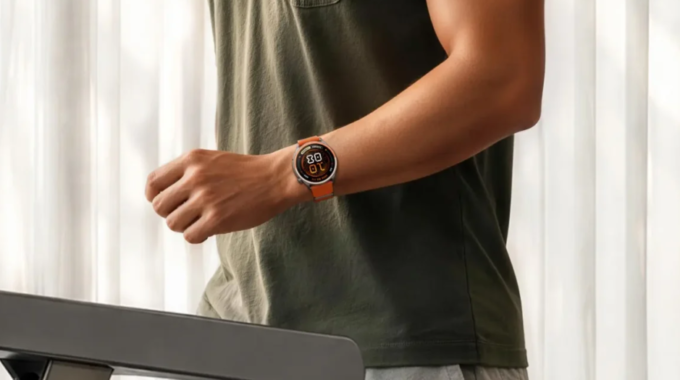
The hardware backing all this up is solid. The Watch S2 has a 1.46-inch AMOLED display that hits 600 nits at standard brightness, but cranks up to 3,000 nits during outdoor sports modes so you can actually read it in direct sunlight. The stainless steel case is just 8.9mm thick, not counting the rear sensor bump, and the whole watch body weighs only 34.5 grams. It comes with a segmented fluoroelastomer strap that Oppo says is thinner and more breathable than what it used on older models. Colors available are Dynamic Orange, Mist Pink, and Mountain Shadow Gray.
The sensor setup on the back is genuinely impressive. There’s an eight-channel optical heart-rate sensor, a 16-channel blood-oxygen sensor, an ECG electrode, and a temperature sensor. You can run a 60-second health check that logs 13 different metrics in one go. Add in sleep monitoring, sleep apnea screening, all-day SpO2 tracking, and support for over 100 sports modes with dual-frequency GPS, and this watch has the fundamentals covered.
- 1.46-inch AMOLED, up to 3,000 nits brightness
- 8.9mm thin stainless steel case, 34.5g
- FatMax personalized fat-burning heart rate tracking
- 8-channel HR sensor, 16-channel SpO2, ECG, temperature
- Dual-frequency GPS and 100+ sports modes
- NFC, gesture controls, dual-device Bluetooth connectivity
- 5ATM water resistance with IP69 and IP69K ratings
- 7-day battery (up to 10 days in saver mode)
Software-side, the Watch S2 runs ColorOS Watch 17 and includes something called Fluid Cloud, which pushes live updates like transit times and food delivery status to your wrist. It can also connect to two smartphones at once, so you get notifications from both. That’s a genuinely useful feature for people who carry a work phone and a personal phone. Battery life lands at seven days for normal use, or up to 10 days if you flip on battery saver. Always-on display cuts that down to about four days, which is pretty standard for a watch this slim.
Pricing starts at 1,599 yuan, which is roughly $238. That puts it in a competitive spot against mid-range offerings from Samsung, Garmin, and Amazfit. The Watch X3 is also getting a new Titanium Moon color option priced at 2,799 yuan (around $418). Both go on sale in China starting September 24. No word yet on international availability, but Oppo has been expanding its smartwatch lineup globally, so it’s worth keeping an eye on.
The broader context here is that the affordable health-tracking smartwatch space is getting crowded fast. Brands need a hook, and Oppo’s bet is that smarter, more personalized fitness data is what gets people to spend. FatMax might sound like marketing fluff, but the underlying logic is actually grounded in exercise science. If it works as advertised, that’s a real differentiator. And at $238, you’re not paying a premium to find out.