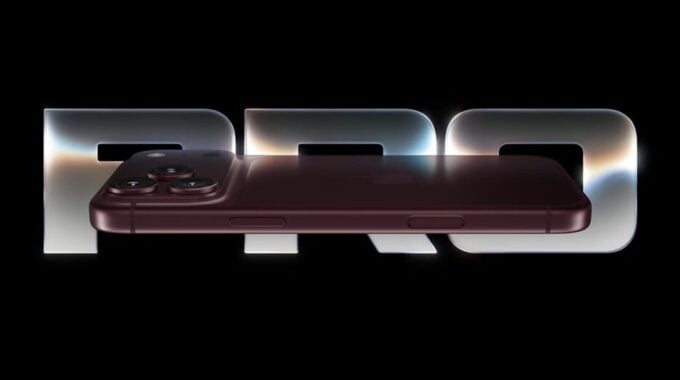
Apple just raised iPhone prices, and China didn’t flinch. First-week sales of the iPhone 18 Pro series hit approximately 1.3 million units in China, up 15% from the iPhone 17 Pro series at the same point last year. That’s a striking number given that pretty much every major smartphone maker has been hiking prices in 2026 to offset surging memory chip costs — and most Chinese flagship launches this September landed with a thud.
According to data compiled by RD Observation, a Weibo blogger who tracks retail point-of-sale data, first-day sales alone came in around 322,800 units — roughly 130% of the year-ago figure. The iPhone 18 Pro Max took the bigger slice, accounting for 55.5% of day-one sales. Worth flagging: Apple doesn’t publish unit sales by model, so these are third-party estimates, not official numbers.
What really puts the scale in perspective is this: the iPhone 18 Pro series’ first-week total reached about 90% of what the entire iPhone 17 lineup — Pro and standard models combined — sold in its comparable opening week. The Pro line alone almost matched the full previous generation. That’s not a small thing.
So why is China holding up while other markets are wobbling? A few reasons. Apple’s grip on China’s premium smartphone segment is enormous. In the market above CNY 6,000 (around $890), iPhone commands over 60% share. Buyers shopping at that price point are less likely to balk at a CNY 1,000 price increase — about 11% more than the iPhone 17 Pro at launch. The phone itself also helps. The exterior design is mostly the same as the 17 Pro, but the internals got a full refresh: faster chip, better battery life, quicker charging, improved thermal management, upgraded cameras, and iOS 27. For anyone still on an iPhone 15 Pro or older, the upgrade feels real and tangible.
Outside China, the story is different. Morgan Stanley analyst Erik Woodring noted in a mid-September report that demand may be stronger than feared, pointing to the fact that production for the second half of 2026 increased 18% year-over-year to 71 million units, yet delivery lead times stayed at 2 to 4 weeks after pre-orders opened — same as last year. That suggests order volume is keeping pace with higher supply. But GF Securities analyst Jeff Pu called U.S. demand “sluggish” just days after pre-orders began, with most iPhone 18 Pro configurations available for immediate delivery — a sign that demand isn’t exactly overwhelming supply stateside.
Japan is the roughest market of the three. The iPhone 18 Pro launched there with a price increase exceeding 20% compared to the iPhone 17 Pro’s original launch price, and by September 22, 108 out of 352 configurations across Apple’s 11 Japanese retail stores were available for same-day pickup. Last year, most configurations had 2 to 3 week waits within half a day of pre-orders opening. That’s a sharp reversal.
There are also some legitimate quality concerns circling the iPhone 18 Pro. Third-party testing data published on Weibo suggests the Samsung G9N OLED panel used in the 18 Pro has noticeably worse off-axis color accuracy than the previous generation. The angle at which color shift becomes perceptible has narrowed to around 20 degrees, with peak color difference values approaching 3.0 at 35 to 40 degrees. Samsung’s panels were previously considered the stronger option among Apple’s two major display suppliers — so this is a step back. According to South Korean outlet The Elec, Apple proposed paying around $70 per OLED panel for the 18 Pro Max, down from roughly $80 for the 17 Pro Max — a 20% cost cut. Whether that price reduction directly caused the quality drop is not confirmed, but it’s hard to ignore the timing.
Storage performance is also raising eyebrows. The base 256GB model uses QLC NAND flash memory, which delivers significantly lower sustained write speeds compared to the TLC-based 512GB model — in some tests, 38% slower under mixed workloads when the cache is exhausted. In everyday use this probably won’t matter much, but it’s the kind of thing that shouldn’t be happening on a $1,199 phone.
And yes, that’s the U.S. starting price now: $1,199. Up $100 from the iPhone 17 Pro. Japan is paying the equivalent of roughly $1,450 at current exchange rates. These are not small sums.
The next big Apple moment is coming fast. The foldable iPhone Duo goes on sale October 23, with pre-orders starting October 16. The inner display unfolds to 7.6 inches, both folded and unfolded aspect ratios are a unified 4:3, and the hinge uses over 100 components with internal display layers designed to distribute stress like the pages of a book. It’s the most ambitious iPhone Apple has ever built. Whether it can carry the momentum the 18 Pro started in China — and actually move the needle in markets that are clearly more price-sensitive right now — is the question worth watching.