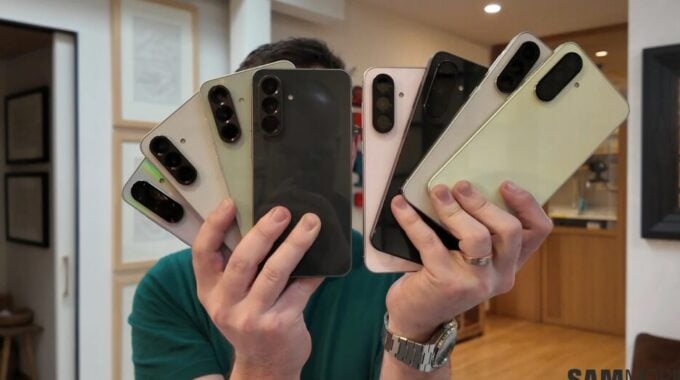
One in seven people on Earth is carrying a Samsung Galaxy phone. Let that sink in. Samsung has officially put a number to its global reach, and that number is 1.2 billion active Galaxy users worldwide. It’s a staggering figure, and it didn’t happen because of luck.
The milestone was revealed through a video published by Samsung Japan on YouTube. No big press event, no formal announcement. Just a quiet confirmation that Samsung has quietly become one of the most-used consumer electronics brands in human history. For context, Apple has long talked up its installed base as a key business metric. Samsung just reminded everyone it plays in a completely different league when it comes to raw reach.
So how does a phone brand get to 1.2 billion users? A big part of the answer is price range. Samsung doesn’t just sell to the person who wants a $1,200 flagship. It sells to the person who needs a reliable phone for $150. The Galaxy A series alone has moved enormous numbers across Southeast Asia, Latin America, and Africa, markets where Apple barely competes. At the other end, Samsung has foldables pushing past $2,400. No other Android brand covers that full spectrum as consistently or as successfully.
But hardware variety is only part of the story. Samsung has also been building out its legacy for over 15 years. It launched its first Android phone, the Galaxy GT-I7500, back in June 2009, just months after Android made its commercial debut. The Galaxy S line arrived in 2010 and the growth took off fast. Then came the Galaxy Note in 2011, which basically invented the large-screen smartphone category before anyone was even calling them phablets. The Galaxy S6 in 2015 brought a premium metal-and-glass design that changed what people expected from Android phones. And in 2019, Samsung took a real risk and launched the original Galaxy Fold, which started the foldable category. That category now includes multiple form factors and price tiers, and Samsung still leads it.
Getting people into the Galaxy ecosystem has also gotten easier. The Smart Switch app lets users transfer data from old devices with a QR code scan, making switching feel low-effort. Cross-platform features with iPhone users have improved too, especially with RCS messaging and Quick Share support. Samsung isn’t just keeping existing users, it’s making it less painful for people to come over from other platforms.
Security has also been a quiet but consistent selling point. Samsung Knox provides hardware-level protection baked into Galaxy devices, which matters more now than it ever has as phones store more personal and financial data than ever before.
Hitting 1.2 billion users puts real pressure on Samsung’s competitors. Google’s Pixel is still a niche product. Other Android brands like Xiaomi and OPPO have strong regional numbers but nothing close to this global footprint. For app developers, accessory makers, and platform partners, Samsung’s scale is impossible to ignore. When Samsung pushes a feature or standard, 1.2 billion people potentially feel it. That’s not a small thing.