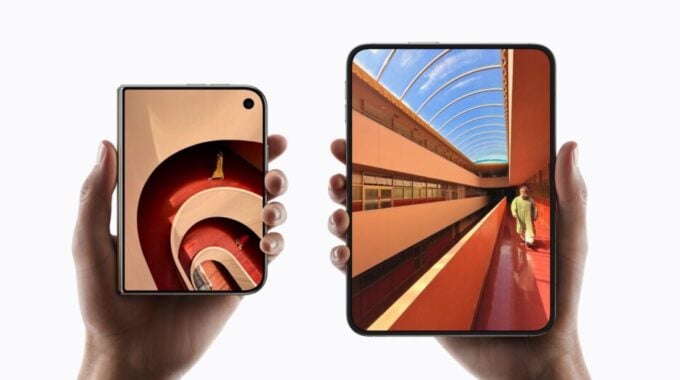
A $2,000 phone with no Face ID, a weaker camera than the Pro lineup, and a hinge made of over a hundred individual parts. And yet, Apple might actually sell out of it in minutes. That’s the wild situation surrounding the iPhone Duo right now.
According to AndroidHeadlines, Bloomberg’s Mark Gurman reported in his Power On newsletter that the iPhone Duo has hit what he describes as “extraordinary” supply chain constraints. The situation is worse than what Apple had projected internally earlier this year. At one point, the company wasn’t sure it could ship in October at all, with November looking like a real possibility. But somehow, Apple scraped together enough inventory to keep the original launch window intact.
Still, making the launch date doesn’t mean the phone will actually be easy to buy. Pre-orders open this Friday, and if you’re planning to order one, you should probably have that page loaded and ready to go the moment it goes live. Limited supply plus high demand is a painful combination, and early buyers of high-profile Apple products already know how that dance goes.
The supply crunch isn’t hard to explain when you look at what’s actually going into this phone. Apple itself has said the hinge alone is made up of more than a hundred components. Add a flexible display on top of that, and you’ve got a manufacturing challenge that makes a standard smartphone look trivially simple. Foxconn, which is handling production, was reportedly sitting at around a 60% yield rate. That means roughly four out of every ten phones coming off the line don’t meet Apple’s quality bar. For a product this expensive, Apple isn’t going to compromise on that, which means a significant chunk of production simply gets rejected.
What makes this interesting from a market perspective is the demand side of the equation. The iPhone Duo costs close to $2,000. For that price, you’re getting a phone that folds, yes, but you’re also giving up Face ID and accepting a camera system that doesn’t compete with the iPhone Pro models. Those are real trade-offs, not minor footnotes. Foldables have generally struggled to find mass audiences because they ask buyers to spend more money for a device that, in many ways, does less than the flagship it sits alongside.
And yet, Apple might sell out anyway. That says something about the pull of Apple’s brand and the pent-up curiosity around its first foldable. It also fits into the broader story of the foldable market maturing. Samsung has spent years building an audience for the Galaxy Z Fold line, and Google entered with the Pixel Fold. Apple arriving with the Duo, even at this price, could push foldables further into mainstream conversation simply because of who’s making it.
Whether the demand holds up beyond the launch rush is a separate question. But for now, if you want one on day one, Friday is your moment. Don’t blink.