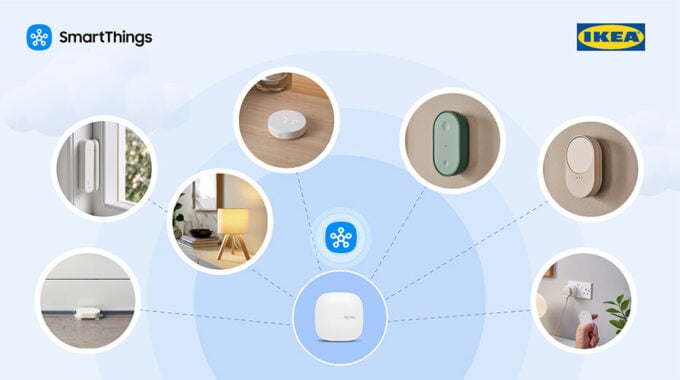
Samsung SmartThings now works directly with IKEA’s complete line of Matter-enabled smart home devices, removing a major barrier that previously required users to buy and manage separate hubs from both companies. The integration covers 25 IKEA products including smart bulbs, plugs, sensors, and a distinctive scroll wheel remote.
The partnership matters because IKEA’s budget-friendly smart home products have been popular with newcomers to home automation, but the technical complexity of connecting multiple hubs often deterred casual users. Now these devices connect straight to Samsung’s SmartThings hub, making the setup process much simpler.
Samsung announced that all 25 IKEA smart home devices now support Matter, the industry standard designed to make different brands work together. The lineup includes:
- Smart bulbs and plugs
- Temperature, humidity, and air quality sensors
- Motion sensors and door sensors
- Water leak sensors
- A scroll wheel remote control
The scroll wheel remote stands out as particularly innovative. Users can rotate the wheel to fine-tune lighting brightness and color temperature, making it easier to set the right mood. Samsung says blind control will be added later this year, though only lighting works at launch.
Samsung has also built specific smart home scenarios around the IKEA devices. Door sensors can monitor elderly parents’ daily activity through SmartThings Family Care, sending updates about when they’re active at home. Air quality sensors provide sleep environment reports, comparing bedroom conditions against optimal ranges and suggesting improvements like lowering temperature to 19-21°C.
The integration represents Samsung’s broader push to lead the Matter ecosystem. SmartThings was the first platform to adopt Thread 1.4, a low-power networking technology that lets devices from different brands work as one unified system. This early adoption gives Samsung an advantage as the smart home market grows and consumers expect products to work together regardless of manufacturer.
“By connecting IKEA devices to SmartThings, even first-time smart home users can enjoy a familiar and easy connectivity experience without financial burden,” said Jaeyeon Jung, Executive Vice President of SmartThings at Samsung Electronics. The company plans to continue expanding partnerships to bring more affordable options into its ecosystem.
The move comes at a crucial time for the smart home market. While premium products from companies like Philips Hue and Nest have driven early adoption, mainstream growth depends on more affordable entry points. IKEA’s design-focused approach appeals to younger consumers who want both functionality and aesthetics, while Samsung’s platform provides the technical backbone for more advanced automations.