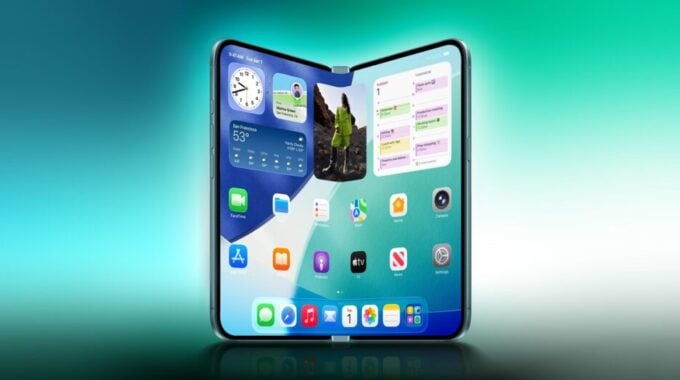
Apple’s first foldable iPhone, expected to be called the “iPhone Ultra,” will likely launch with just two color options when it arrives in 2026. Multiple sources point to a deliberately restrained color palette that avoids bold or vibrant finishes for the groundbreaking device.
This conservative approach reflects both the technical challenges of manufacturing foldable phones and Apple’s strategy for launching entirely new product categories. The limited selection also mirrors how Apple handled the iPhone X launch in 2017, when the company offered just two colors for its then-revolutionary new design.
The Weibo leaker “Instant Digital” first reported the two-color limitation in February, confirming white as one option without revealing the second choice. More recent supply chain reports suggest the lineup will include a classic silver and white model alongside an indigo option similar to the iPhone 17 Pro’s Deep Blue finish.
This restrained color strategy makes sense for several practical reasons. Manufacturing foldable phones is already complex and expensive, with supply chain analyst Ming-Chi Kuo warning that production challenges could limit smooth shipments until 2027. Adding more color variants would increase manufacturing complexity and costs for a device that’s expected to be in short supply regardless.
The economics also support a minimal color range. With Bloomberg’s Mark Gurman reporting that the iPhone Ultra will “cross the $2,000 threshold,” Apple is targeting premium buyers who are less likely to be swayed by color variety. The focus will be on the technology itself rather than aesthetic options.
Apple used a similar approach with the iPhone X, which launched in just Silver and Space Gray in November 2017 at a then-record $999 starting price. The company added Gold to the lineup a year later with the iPhone XS, suggesting the iPhone Ultra could gain additional colors over time as production scales up.
The foldable iPhone represents Apple’s biggest design change in years, entering a market where competitors like Samsung have already established foldable phone lineups. However, Apple’s entry could significantly expand the foldable market, given the company’s influence on consumer adoption of new technologies.
Early production forecasts suggest Apple will manufacture 15 to 20 million foldable iPhones across the product’s first two to three years, indicating modest annual volumes compared to regular iPhone models. This limited production capacity makes the case for keeping initial options simple even stronger.
The iPhone Ultra is expected to be announced in September 2026 alongside the iPhone 18 Pro and iPhone 18 Pro Max, marking Apple’s long-awaited entry into the foldable smartphone market that has been growing steadily over the past few years.