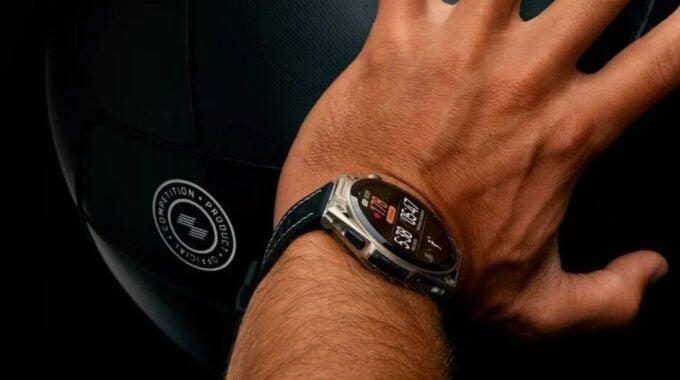
Amazfit has officially launched the Balance 3, marking a significant departure from the series’ previous lifestyle-focused design. The new smartwatch positions itself as a serious training tool rather than a fashion accessory that happens to track workouts.
The Balance 3 launched on June 2, 2026 at $369.99 for the stainless steel version, with a titanium variant coming soon at $449.99. Amazfit also introduced a premium Balance Ultra model at $599.99. This pricing strategy places the Balance 3 directly in competition with mid-range Garmin and COROS models while undercutting their prices significantly.
The smartwatch industry has seen increasing demand for devices that bridge the gap between basic fitness trackers and premium sports watches. Amazfit’s approach with the Balance 3 addresses this market segment by offering professional-grade features at a more accessible price point. This matters because it could force established players like Garmin to reconsider their pricing strategies for similar features.
The 51.4mm case houses a 1.5-inch AMOLED display with 3,000 nits peak brightness – bright enough for clear visibility in direct sunlight during outdoor workouts. Sapphire crystal glass protects the screen, while 10ATM water resistance means the watch can handle swimming and water sports without issues.
The most significant change is the design language. Previous Balance models prioritized a refined aesthetic suitable for office wear. The Balance 3 adopts a more athletic styling with bolder bezels and a harder visual identity. This shift signals Amazfit’s intention to compete directly with Garmin’s Forerunner line rather than lifestyle-focused alternatives like Samsung Galaxy Watch or Fitbit models.
Battery performance remains a key selling point. The 658mAh battery delivers 21 days of typical use or 7 days with the always-on display active. This endurance puts it ahead of most smartwatch competitors, particularly important for athletes who need reliable tracking during multi-day events or extended training periods.
The Balance 3 includes comprehensive navigation features:
- Dual-band GPS for improved accuracy
- Offline maps with downloadable packages
- Turn-by-turn navigation
- 180+ sports modes
- HYROX-specific training plans and pace simulation
The HYROX support is particularly noteworthy. HYROX is a fitness racing format that has grown rapidly in participation over the past two years. No major smartwatch competitor offers dedicated HYROX training plans, giving Amazfit a unique positioning advantage in this growing market segment.
Amazfit introduces what it calls the Hybrid Training System, combining three data streams into a unified recommendation. BioCharge tracks recovery and energy levels, LifeLoad monitors daily stress, and Training Load measures workout intensity. Rather than presenting separate metrics, the system provides a single readiness score that tells users whether they should train hard, go easy, or rest completely.
This approach differs from most fitness watches that simply display raw data. The synthesis into actionable recommendations could appeal to athletes who want guidance without needing to interpret multiple data points themselves. The system runs through Amazfit’s Zepp App, which handles data analysis and long-term trend tracking.
Practical features include 64GB of onboard storage – significantly more than the 4-8GB typical in this price range. This capacity supports large offline music libraries, comprehensive map packages, and extensive workout data without requiring manual storage management. Built-in speaker and microphone enable Bluetooth call handling directly from the watch, useful during activities when accessing a phone is impractical.
Additional features include NFC for contactless payments and a built-in flashlight with red and white light modes – a practical addition for early morning or evening outdoor activities.
The Balance 3 represents Amazfit’s most direct challenge to established sports watch brands. By offering sapphire glass protection, dual-band GPS, comprehensive training metrics, and 21-day battery life at $369, it undercuts premium competitors by roughly 50% while matching many of their core features. Whether this pricing pressure will force market leaders to respond with more competitive offerings remains to be seen, but the Balance 3 certainly expands options for serious athletes who previously had to choose between basic fitness trackers and expensive premium models.