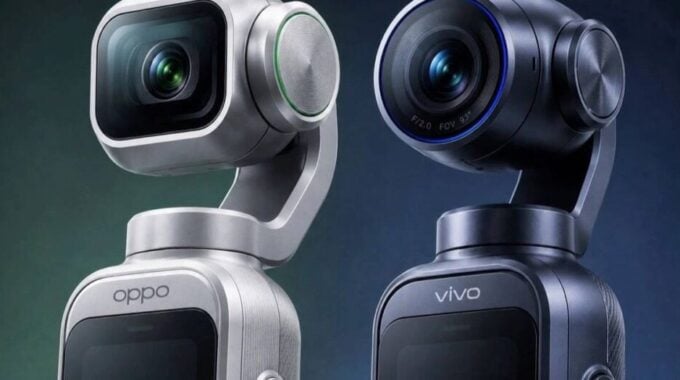
Two product teams under the same corporate umbrella are building nearly identical pocket gimbal cameras. OPPO and Vivo have both confirmed they’re developing 200MP handheld cameras to compete directly with DJI’s Osmo Pocket series. The twist? Both companies are subsidiaries of BBK Electronics, meaning the same parent company is funding two competing devices for the same market segment.
The pocket gimbal camera space has been relatively quiet for years, dominated primarily by DJI’s Osmo Pocket lineup. This simultaneous push from two major smartphone manufacturers signals that the category may be heating up as brands look for new product categories beyond phones and wearables.
Both OPPO and Vivo have confirmed they’re using the same 200MP sensor on a 1/1.12-inch format, which points directly at Sony’s LYT-901 as their shared sensor choice. This represents a significant spec jump over DJI’s current Osmo Pocket 4, which launched in April at $499 with a 1-inch sensor producing up to 37MP output.
OPPO’s device carries the codename “Fuyao” and will feature Hasselblad co-branding, building on the same imaging partnership behind their Find X9 Ultra’s camera system. Vivo’s device, known internally as “Vivo Pocket,” will carry Zeiss branding. Both partnerships already exist on their respective flagship phones, making the pocket cameras a natural extension of established brand relationships.
The companies are targeting flagship-level processing chips and seamless smartphone integration. Users will be able to transfer and edit footage directly from the camera to their OPPO or Vivo phone respectively. This smartphone connectivity could be a key differentiator from DJI’s ecosystem, which focuses more on standalone operation and computer-based editing workflows.
The Sony LYT-901 sensor brings several technical advantages over DJI’s current hardware:
- 200MP output versus DJI’s 37MP maximum
- Physically larger 1/1.12-inch format compared to DJI’s 1-inch sensor
- QQBC architecture enabling 4x lossless zoom without resolution loss
- 4K recording at up to 120fps in binning mode
- Dynamic range rated at over 100dB
However, megapixels and sensor size only tell part of the pocket gimbal story. DJI has spent over a decade refining stabilization software, motor technology, and building a creator ecosystem. This experience gap may be more challenging for OPPO and Vivo to overcome than pure hardware specifications suggest.
The BBK situation creates an unusual competitive dynamic. OPPO and Vivo operate as independent brands with separate engineering teams, but they share the same parent company, component suppliers, and manufacturing partners. Whether their simultaneous entry into pocket cameras represents coordinated strategy or genuine internal competition remains unclear.
Vivo’s device is reportedly heading to creators for testing, with a late 2026 launch targeted. OPPO’s timeline is less defined, with the company confirming interest but not committing to specific dates. Meanwhile, DJI is expanding its own lineup with both the Osmo Pocket 4 and upcoming Osmo Pocket 4P to cover different price segments.
The timing may be critical. Insta360’s Luna Ultra, which pairs a 1-inch main sensor with a 1/1.3-inch telephoto and Leica co-engineering, represents another emerging threat to DJI’s dominance. The pocket gimbal category, quiet for years, is now becoming one of the fastest-moving hardware segments in consumer tech as smartphone manufacturers look for new growth areas beyond their core phone business.