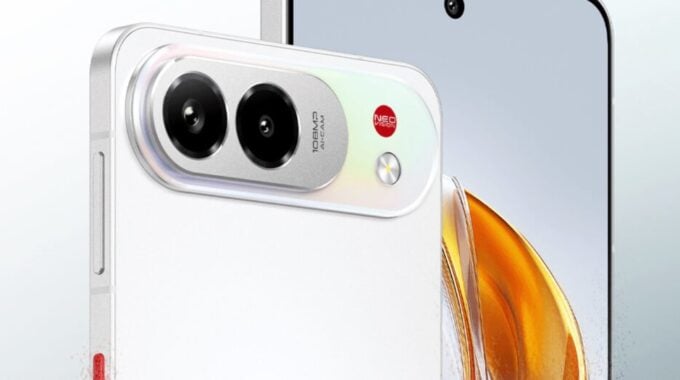
Ultra-thin smartphones have been having a moment. Apple kicked off the trend with the iPhone Air, and now ZTE is joining the race with a phone that arguably offers more hardware for less money. The Nubia Air Pro is 5.99 mm thin, yet still packs a 108 MP camera, a 5,000 mAh battery, and a sharp AMOLED screen into a body that’s expected to cost around $399 in Europe.
That price point matters. Most ultra-thin phones trade battery life and camera specs for their slim profile, and they usually charge a premium for the privilege. The Nubia Air Pro pushes back on both of those assumptions, which makes it an interesting proposition for buyers who want a sleek phone without the usual compromises or the flagship price tag.
As reported by Notebookcheck, the Nubia Air Pro is a step up from the standard Nubia Air. ZTE claims it is slightly thicker than the Apple iPhone Air and roughly the same thickness as the Motorola Edge 70. Worth noting: the original Nubia Air ended up being about 0.8 mm thicker than advertised, so it’s reasonable to treat the 5.99 mm figure with some skepticism until the phone ships.
The design takes clear inspiration from the iPhone Air, with a metal frame and a pill-shaped rear camera module. The phone weighs 172 grams and carries an IP69K rating, which is actually a stronger water resistance certification than what most phones offer, covering high-pressure water jets rather than just submersion.
On the display side, the Nubia Air Pro has a 6.77-inch AMOLED panel with a 144 Hz refresh rate and a peak HDR brightness of 4,500 nits. That brightness figure is well above average, even for flagship phones. A 32 MP selfie camera sits in a punch hole cutout at the top of the screen.
The core specs are:
- Processor: MediaTek Dimensity 7100 with four Cortex-A78 performance cores and four Cortex-A55 efficiency cores
- RAM: 8 GB
- Storage: 256 GB or 512 GB
- Battery: 5,000 mAh with 45W USB-C charging
- Main camera: 108 MP (second camera details not yet disclosed)
- Selfie camera: 32 MP
The Dimensity 7100 is a mid-range chip, which explains how ZTE keeps the price low. It’s not going to compete with a Snapdragon 8 Elite in raw performance, but for everyday use and camera work, it should handle things well enough for most people.
One genuinely unusual addition is a wristband accessory that lets users strap the phone to their upper arm. In sports mode, the phone can track steps, calories, and distance using GPS, essentially turning it into a large but functional fitness device.
ZTE’s website already lists the Nubia Air Pro, though official pricing has not been confirmed. According to leaker Roland Quandt, the European price for the 8 GB / 512 GB configuration will be around 350 euros, which converts to roughly $399. That’s a competitive ask for a phone with these specs, especially given how much rival brands charge for similarly slim designs.
The broader context here is that thin phones are clearly becoming a market segment of their own, not just a one-off Apple experiment. If ZTE can deliver on the advertised specs at this price, it puts real pressure on brands charging two or three times as much for a comparable form factor.