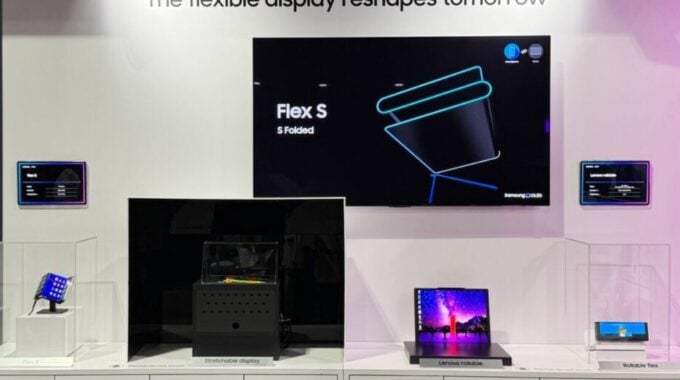
Samsung has spent years showing off display technology that never quite made it into a real phone. Rollable screens, stretchable panels, dual-folding glass. All of it has appeared at trade shows, and none of it has shipped. That may finally be about to change. According to SamMobile, Samsung is planning to launch a smartphone with a rollable screen in the first half of 2028.
The report, citing South Korean outlet Money Today, says Samsung Display is in advanced talks to supply rollable OLED panels to Samsung’s mobile division. A Samsung Electronics executive reportedly confirmed internal development is underway, with Samsung Display panels the likely choice for the final product. Market research firm Omdia expects the device to sport a 10-inch OLED panel with a 16:9 aspect ratio and a pixel density of 440 pixels per inch.
Those specs put the device in tablet territory when fully extended, which seems to be the whole point. A screen that size at that pixel density would be genuinely useful for video, documents, and multitasking in a way that current foldables are not. Samsung’s Galaxy Z Fold series tops out around 7.6 inches when open. A rollable phone that expands to 10 inches is a different category of device entirely.
The timing carries some symbolic weight. If Samsung ships this in the first half of 2028, it lands in the tenth anniversary year of its foldable smartphone lineup. The Galaxy Z Fold launched in 2019, and Samsung has spent the years since building and largely owning that market. Rollables are the next logical step, and Samsung Display has said publicly that it wants to lead in the next generation of form factors the same way it led in foldables.
The competitive pressure is real. Chinese brands including Huawei, Oppo, and Honor have been aggressive in the foldable space, and several have shown rollable prototypes of their own. Samsung knows that being first in a new category buys time. Being second or third does not. Industry analysts have noted that companies with both the technology and a reliable supply chain will have an edge when rollables go mainstream, and Samsung checks both boxes more reliably than most.
A few things will determine whether this actually works as a product:
- Durability: A rollable mechanism adds moving parts, and Samsung will need to prove the screen survives years of daily use
- Price: Foldables are already expensive. A rollable could cost more, which limits the audience at launch
- Software: A screen that changes size needs apps and an operating system that adapt properly, something Samsung has struggled with even on its foldables
- Battery life: More screen means more power draw, and there is only so much room inside a thin chassis for a larger cell
None of these are dealbreakers, but they are real engineering problems. Samsung has until 2028 to solve them, and the fact that internal development is reportedly already underway with a specific launch window suggests this is further along than a concept. Whether it ships on schedule, and whether it ships well, is a different question. Samsung has pushed back hardware before when it was not ready. With rollables, getting it right the first time matters more than getting it out fast.