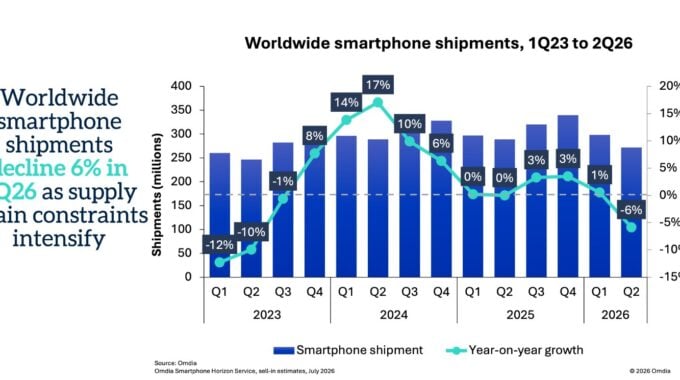
Apple just posted its strongest Q2 performance in the company’s history, and the broader smartphone market still shrank. That tells you everything about how weird things are right now. According to Omdia, global smartphone shipments fell 6% year on year to 272 million units in Q2 2026, and the culprit isn’t a demand slump or an economic crash. It’s memory prices. Specifically, soaring costs for the chips inside your phone that store apps, photos, and everything else you care about.
Why memory costs are breaking the market
Here’s the basic problem. Memory and storage components have gotten significantly more expensive, and that ripple effect hits vendors hard. They either absorb the costs and watch their margins shrink, or pass them on to consumers and watch demand soften. Most chose a mix of both, and the result has been a sharp pullback in budget and entry-level phones.
This isn’t a blip. Omdia research manager Le Xuan Chiew put it plainly: ‘The current memory cost cycle is driving a structural repricing of the industry, creating a lasting shift in how vendors compete on pricing, profitability, and product positioning.’ That means the cheap phone you could buy last year for $150 might now cost $180 or $200. And for buyers in emerging markets, that gap matters a lot.
Samsung and Apple come out on top
Samsung shipped 60.5 million units in Q2, up 5% year on year, holding a 22% market share. Its secret weapon here is vertical integration. Samsung makes its own memory chips, so it had a buffer against the same supply pressures that hurt competitors. The delayed Galaxy S26 launch also pushed premium demand into Q2, giving Samsung a convenient sales boost right when it needed one.
But Apple’s number is the real headline. It shipped 55.1 million units, up 23% year on year, reaching a 20% market share in what is normally its quietest quarter of the year. A lot of that came from channel partners stockpiling iPhone 17 inventory ahead of expected price increases. There’s also growing chatter that the iPhone 18 will launch at higher price points, which pushed retailers to load up on current stock while they still could.
The brands that felt the pain
Not everyone fared well. The rest of the top five had a rough quarter:
- Xiaomi: 31.2 million units, down 26% year on year. More than half of Xiaomi’s phones are priced under $200, making it the most exposed vendor to memory cost inflation. Markets in Asia Pacific and Latin America were hit especially hard.
- OPPO (including realme and OnePlus): 28.4 million units, down 17%. The brand actively cut entry-level models to protect profitability, which hurt volume but helped margins.
- vivo: 21.5 million units, down 18%.
Xiaomi’s back-to-back quarterly declines are worth watching. The brand built its whole identity on aggressive pricing in budget segments. When those segments get squeezed, Xiaomi feels it more than anyone.
What the rest of 2026 looks like
Don’t expect a fast recovery. Omdia says elevated component costs will keep the market under pressure through the rest of the year. The sharp decline from Q2 should ease a bit, but a real volume rebound won’t happen until memory costs actually come down. And right now, there’s no clear timeline on that.
The Middle East is another concern, with shipments there falling 18% year on year because of geopolitical disruption. Omdia expects that to be temporary and sees stabilization in the second half. But the memory cost issue is structural, not temporary.
So where does this leave consumers? Phones are getting more expensive across the board, and that trend is probably here to stay even after component costs normalize. Vendors are already adjusting to the idea that buyers will accept higher prices, and they’re not going to voluntarily lower them once they’ve reset expectations. Financing deals, trade-in programs, and bundled services are the tools brands will use to make those higher prices feel more palatable. But make no mistake, the era of ultra-cheap flagship alternatives is getting a lot harder to sustain.