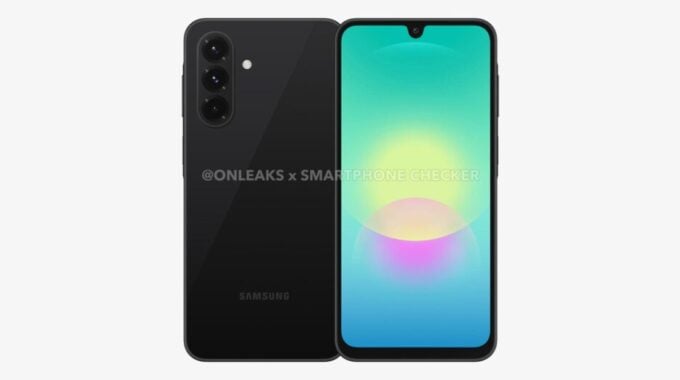
Samsung is apparently shipping the same processor it used last year into its next budget phone. That’s either a bold cost-cutting move or a lazy one, depending on how you look at it. Early Geekbench results for the Galaxy A18 LTE have surfaced online, and they tell a pretty mixed story about what Samsung has planned for its popular A1x lineup.
According to Android Headlines, the test device, listed under model numbers SM-A185G and SM-A185F, posted a single-core score of around 744 and a multi-core score of roughly 2,064 on Geekbench. Those numbers are almost identical to the Galaxy A17 from last year. And that makes total sense once you see what’s powering it.
The chip inside is the MediaTek Helio G99, the same 6nm processor Samsung used in the A17. It has two Cortex-A76 performance cores running at 2.2 GHz, six Cortex-A55 efficiency cores at 2.0 GHz, and a Mali-G57 MC2 GPU. Paired with just 4GB of RAM, this is not a spec sheet that’s going to turn heads. The Helio G99 is a solid chip for the price tier, but reusing it a second year in a row raises real questions about whether Samsung is pushing value or just cutting corners.
But here’s where things get genuinely interesting. The benchmark listing also shows the test unit was running Android 17 with Samsung’s One UI 9 on top. That means the Galaxy A18 could skip One UI 8.5 completely and launch with the freshest software Samsung has, putting it on the same level as flagships like the Galaxy Z Fold 8 and Z Flip 8 in terms of OS version. For a budget phone, that’s actually a big deal.
Software support is one of the main reasons people hesitate on budget Android phones. If Samsung can promise multiple years of updates starting from Android 17, that changes the value calculation considerably. Budget buyers aren’t just looking at day-one specs anymore. They want a phone that stays relevant for two or three years, and launching on the latest OS is a good way to signal that commitment.
Beyond the chip and software, the A18 is expected to carry over the familiar A17 design, including a waterdrop notch, a standard camera setup, and a similar battery. Nothing flashy. Samsung hasn’t confirmed a release date yet, but the A17 launched in September last year, so an autumn window for the 4G model feels reasonable. A 5G version would likely follow early next year.
The bigger picture here is that Samsung keeps dominating the budget Android space not by offering the most powerful hardware, but by offering the most recognizable brand name with reliable software support. The Helio G99 reuse is a little disappointing, and 4GB of RAM in 2026 is genuinely tight. But if Samsung prices this right and actually delivers on long-term updates, the Galaxy A18 could still be a compelling pick for shoppers who want a no-drama daily driver without spending flagship money.
- Processor: MediaTek Helio G99 (6nm), same as Galaxy A17
- Cores: 2x Cortex-A76 at 2.2 GHz, 6x Cortex-A55 at 2.0 GHz
- GPU: Mali-G57 MC2
- RAM: 4GB
- Software: Android 17 with One UI 9
- Expected launch: Autumn 2026 (4G), early 2027 (5G)
So the Galaxy A18 is not trying to reinvent anything. It’s iterating carefully, maybe too carefully on the hardware side. But if the One UI 9 launch holds true, Samsung might just have pulled off a smart budget move by making the software the headline instead of the chip.