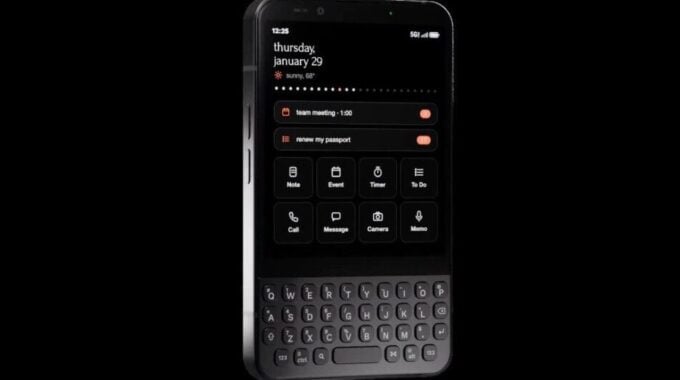
Most phones want you addicted. The Minimal Phone was built to fight that. And now there’s a second version, with a much better screen, that still somehow sticks to its original promise. That’s harder to pull off than it sounds.
The Minimal Phone 2 has swapped out its e-ink display for an OLED panel, which is a pretty significant shift for a device that built its whole identity around a low-stimulation screen. E-ink was the point. It’s slow, it’s grayscale, and it makes doomscrolling genuinely unpleasant. So going OLED feels like a betrayal on paper. But as reported by Android Central, the phone keeps its soul intact through software, not just hardware choices.
The real work is still being done by the Monk Mode launcher and the app blocking tools that made the original worth talking about. The idea is that the OLED screen is there when you need it for maps, photos, or anything that actually benefits from color and brightness. But the phone still pushes back hard when you try to waste time on it. That’s the balance the team is going for, and it’s an interesting bet.
Why does this matter? Because the original Minimal Phone found a genuine audience. People are tired of smartphones being designed to steal attention, and a whole category of distraction-fighting devices has grown up around that frustration. Light Phone, Punkt, Mudita, all of them are chasing the same crowd. The Minimal Phone stood out because it ran real Android with real apps, it just made using them less fun on purpose. The second version is trying to keep that personality while being more practical day to day.
The physical keyboard is still here too, which remains one of the most distinctive things about this phone. It’s not for everyone. But for people who want to type without touching glass, it’s a real draw. Pair that with an OLED display and you have a device that’s genuinely usable as a daily driver in a way the first version sometimes struggled to be.
Specs and pricing haven’t been fully locked in publicly, but the direction is clear. This is a phone for people who want to be intentional about screen time without going full dumb phone. And that market is growing. As more people start questioning how much time they spend staring at feeds, devices like this stop being niche novelties and start being actual options.
Still, the OLED move is a risk. Part of the original’s appeal was friction. A great screen removes some of that friction. Whether the software guardrails are strong enough to compensate is the real question, and that’s something only long-term users will be able to answer. But the ambition here is right, and that counts for something.