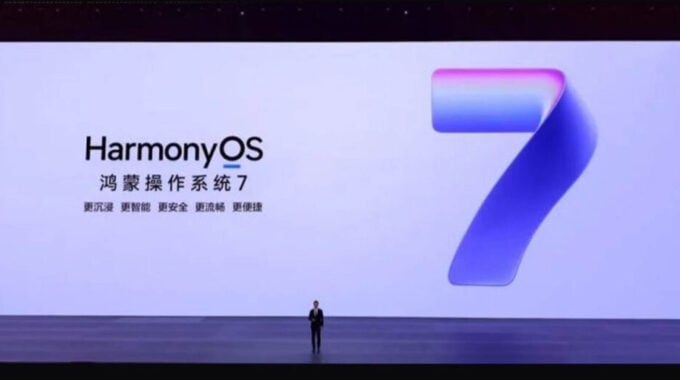
Huawei didn’t just drop a software update. It dropped HarmonyOS 7 alongside the Mate XT 2, a phone that literally folds three times. That alone should tell you how seriously the company is taking this moment.
According to Huawei Central, Huawei Consumer Business CEO He Gang took the stage personally to walk through what HarmonyOS 7 brings to the table. That kind of executive spotlight usually means a company wants you to pay attention. And honestly, there’s enough here to justify it.
The big focus this time around is AI. HarmonyOS 7 pushes smarter, more context-aware features that are supposed to make your phone feel less like a tool you operate and more like something that actually anticipates what you need. That’s a high bar, and plenty of companies have promised it before. But Huawei has spent years building its own chip and software stack precisely so it can tie these layers together tightly, without depending on Google or Qualcomm to play nice.
Security also gets a meaningful bump. Huawei has been leaning into privacy as a selling point for a while now, and HarmonyOS 7 continues that push with stronger protections baked deeper into the OS. For users in markets where Huawei is actually competitive, this matters. People are more aware of what their phones are doing with their data, and an OS that leads with security rather than bolting it on afterward has a real advantage.
The feature list for HarmonyOS 7 includes:
- Enhanced AI capabilities with smarter on-device processing
- Upgraded security and privacy controls across the system
- A more fluid and responsive interface built around the Mate XT 2’s folding form factor
- Deeper integration between apps, devices, and Huawei’s broader ecosystem
And that ecosystem angle is the real story. Huawei has built HarmonyOS from the ground up to connect phones, tablets, wearables, and smart home gear in one unified system. Every update pushes that vision further along. HarmonyOS 7 isn’t just about making one phone better. It’s about proving the whole platform can compete at the highest level, without Google in the picture.
So far, the ambition is clear. Whether the execution delivers is the question worth watching.