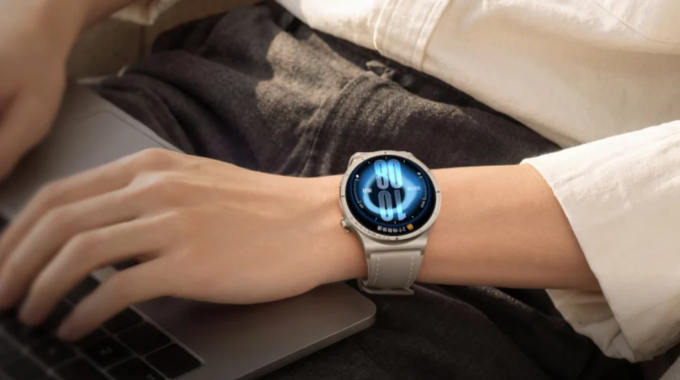
Sapphire crystal glass used to be the kind of spec you’d only see on watches that cost as much as a used car. Vivo just put it on a smartwatch starting at 999 yuan, roughly $149. That’s the headline here, and it’s a genuinely interesting move in a market where most brands are still charging a premium just to call something a “pro” model.
Vivo announced the Watch 6 alongside its new X500 series smartphones, and the wearable comes in three configurations. The base Bluetooth-only model is $149, the standard eSIM version runs 1,399 yuan (around $208), and if you want the full titanium treatment, the top-tier Titanium eSIM model is 1,999 yuan (about $298). Each step up buys you something real, which isn’t always the case with tiered smartwatch lineups.
The base and standard models use a 316L stainless steel frame that weighs 44 grams. The premium model swaps that for TC4 aerospace-grade titanium, which drops the weight to 37 grams. All three are 9.5mm thick, not counting the sensor bump on the back. It’s a clean design story, not a gimmick. The color options are Wilderness and Moonlight, with a Natural Color finish exclusive to the titanium version.
On the health tracking side, Vivo fitted the Watch 6 with eight-channel heart rate and 16-channel blood oxygen sensors. The company claims 97.2% average heart rate accuracy across different workouts compared to professional chest straps, hitting 98.5% during running, walking, cycling, and hiking. Those are strong numbers if they hold up in real-world use. The watch also supports continuous SpO2, sleep tracking, and stress monitoring, with all-day HRV monitoring coming later through a software update.
- Dual-frequency, five-system GNSS with 34% faster satellite lock and 10% better trajectory accuracy
- Built-in barometer and offline maps support
- Over 100 sports modes including running form analysis and racket sport swing tracking
- NFC for payments, transit, and digital car key support
- Vivo’s BlueLM AI assistant for contextual reminders
- eSIM models can handle calls, texts, and navigation without a paired phone
The GPS setup is worth calling out. Vivo included a dual-frequency, five-system GNSS configuration, and the eSIM models use passive phased-array technology to hold three concurrent signal paths across the L1 and L5 bands. For runners and hikers who care about accurate route tracking, that’s a legitimately useful spec, not just marketing language.
Battery life depends on which version you pick and how you use it. The Bluetooth model is rated at 10 days under typical conditions and up to 21 days with light usage. The eSIM model drops to about seven days tethered to a phone, or four days running fully standalone. Turn on the always-on display and you’re looking at roughly six days across all models. None of that is shocking for a watch with this feature set, and 21 days on the base model is a solid number for anyone who hates charging another device every few days.
What makes the Watch 6 interesting isn’t any single spec. It’s the combination of sapphire glass, real health sensors, and a competent GPS setup at a price that undercuts a lot of the competition. Smartwatch buyers in 2026 have more options than ever, and brands have to actually earn the sale. Vivo looks like it’s trying to do exactly that.