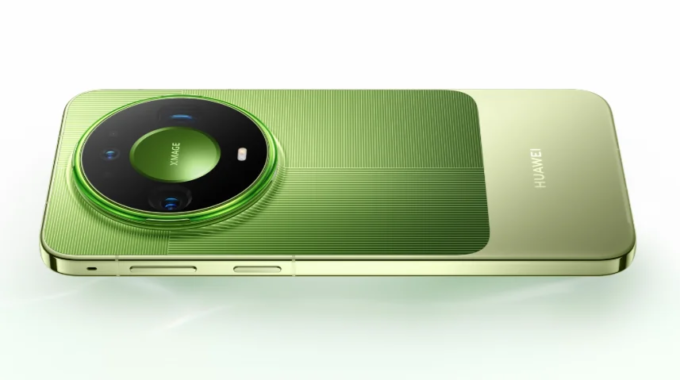
Forget the spec sheet for a second. Huawei’s Mate 90 Pro Max is pulling off something more interesting than winning a benchmark war — it’s matching the iPhone 17 Pro Max and top Snapdragon configs in actual gaming power efficiency. That’s a big deal, and it deserves more attention than it’s getting.
According to Gizmochina, the phone runs on the new Kirin 9050 Pro, which is the first chip to use Huawei’s LogicFolding architecture. Think of it as a stacked, dual-layer processor design where two layers of logic circuits are connected through dense hybrid bonding. That lets Huawei cram more transistors into the same physical space and push higher clock speeds than a traditional flat chip layout. It’s clever engineering, and the real-world numbers suggest it actually works.
At the October 1 launch, Huawei claimed a 31% overall performance jump over the previous generation. The CPU is a nine-core, four-cluster setup with one prime core, two performance cores, four efficiency cores, and two ultra-low-power cores. Multi-core gains are around 23%, GPU rendering is up 40%, and the NPU sees a massive 140% jump. The standard Mate 90 and Mate 90 Pro use the related Kirin 9030 and 9035 chips without the stacked design, and Huawei puts their gains at around 27% and 20% respectively.
But the real story is what happens when you actually play games on the thing. Independent testing from Geekerwan backs up Huawei’s claims and shows something striking: in Genshin Impact at 890P, the Mate 90 Pro Max held steady frame rates while drawing only about 4.2W of system power. That figure sits right alongside the iPhone 17 Pro Max with its A19 Pro chip, and beats some Snapdragon 8 Elite Gen 5 devices outright. Similar results show up in Wuthering Waves and a few other titles.
There is a catch, though. These efficiency wins are specific to native HarmonyOS game ports. Games running through translation layers still perform fine, but the efficiency advantage shrinks. So if your library is mostly translated titles, the gap closes.
And yes, pure synthetic CPU benchmarks still favor the top Snapdragon and Apple chips. Huawei is still working against real manufacturing constraints, and the Kirin 9050 Pro isn’t going to top every leaderboard. But that’s not really the point here. The combination of the new stacked architecture, deep system-level tuning in HarmonyOS, and genuine thermal efficiency in gaming workloads shows that Huawei’s in-house silicon has made a meaningful leap forward.
This matters beyond just one phone. Huawei has been cut off from leading-edge chip fabrication for years, and the fact that its engineers are closing efficiency gaps with the best chips in the world through architectural innovation is a serious story for the industry. It also puts more pressure on native HarmonyOS game development, which will only grow as more developers see what optimized titles can do on this hardware.
- Kirin 9050 Pro with LogicFolding stacked architecture
- Nine-core, four-cluster CPU setup
- 40% GPU rendering improvement over previous generation
- 140% NPU performance gain
- ~4.2W system power draw during Genshin Impact at 890P
- Gaming efficiency comparable to iPhone 17 Pro Max (A19 Pro)
If raw benchmark numbers are what you chase, the Mate 90 Pro Max won’t be your top pick. But if sustained performance and battery life in well-optimized games matter more to you than chart positions, this phone makes a genuinely strong case. Huawei’s chip team is doing a lot with what they have, and that’s worth paying attention to.