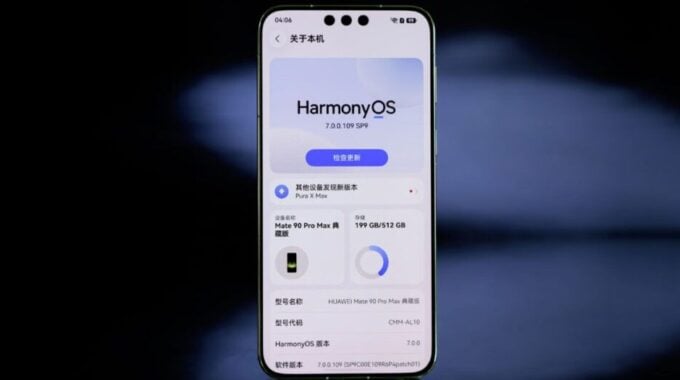
Ten years is a long time in tech. But Huawei is thinking exactly that far ahead when it comes to HarmonyOS, and the plan it’s putting on the table is more aggressive than most people expected.
At a recent International Media Roundtable, Huawei’s Executive Director and Chairman of Consumer Business revealed the company’s long-term strategy for its self-developed operating system. The goal is clear: make HarmonyOS the engine driving Huawei’s entire consumer business forward, without any reliance on Android. That’s a bold position, and one that carries real weight given everything Huawei has been through.
For those who need a quick refresher, Huawei was cut off from Google’s Android ecosystem back in 2019 when U.S. trade restrictions hit. At the time, it looked like a potentially fatal blow to its smartphone ambitions. Instead, Huawei doubled down and built HarmonyOS from the ground up. What started as a survival move has now become the centerpiece of a decade-long growth strategy.
And that context matters a lot here. This isn’t just a company updating its software roadmap. It’s Huawei signaling that it fully believes its own OS can compete on a global scale, independently, over the long haul. That’s a very different conversation than where HarmonyOS was just a few years ago, when critics were quick to write it off as a rebranded Android fork.
So what does accelerating HarmonyOS growth actually look like? Based on what’s been shared, the focus areas include:
- Expanding the HarmonyOS app ecosystem to close the gap with Android and iOS
- Deepening integration across Huawei’s full range of consumer devices
- Attracting more third-party developers to build natively for the platform
- Growing HarmonyOS adoption in international markets over time
The app ecosystem piece is the biggest challenge by far. A phone OS lives or dies by its apps, and HarmonyOS still has ground to cover compared to the two giants. But Huawei has shown it’s patient. And with hundreds of millions of devices already running HarmonyOS, the platform isn’t starting from zero.
If this plan even partially succeeds, it reshapes the global OS conversation in a serious way. Right now it’s Android and iOS, full stop. Huawei wants to change that sentence.