When it comes to building mobile phones for the American market, if you’re a handset vendor supplying devices for either Sprint or Verizon you typically go with Qualcomm for CDMA chipsets. They’ve been powering CDMA devices for as long as anyone can remember, mainly due to the fact that they invented the standard back in the early 90s, which makes Samsung’s recent decision to equip their Droid Charge with a chipset from Via Telecom a news worthy announcement. According to James Mielke, Vice President of Engineering at ABI Research, the “choice of Via Telecom is not critical if restricted to this one model, [but] if a similar switch away from Qualcomm chipsets occurred across all Samsung’s CDMA phone models, it would represent a real challenge to the market’s status quo.”
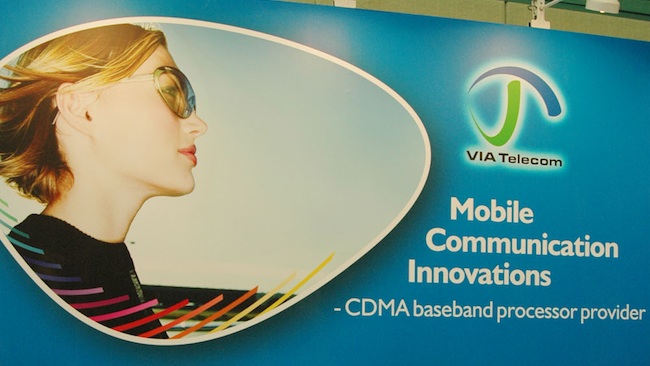
Who exactly is Via Telecom? They started out as LSI Logic WDC in 1995 in San Diego, California. Later in 2002 they were bought out by Via Technologies, makers of x86 processors that never quite took off, and who earlier this year sold their S3 Graphics division to HTC. In 2003 they delivered the first non-Qualcomm CDMA phone in South Korea, three years later they shipped the first non-Qualcomm CDMA phone in Japan, a year after that the first non-Qualcomm CDMA phone shipped in America on Verizon, and in 2008 Nokia built a CDMA phone based on a Via Telecom chipset. To say they’re a bit of an underdog is an understatement.
So why would Samsung make such a move? ABI Research says it’s because Samsung wants to works with vendors closer to their home base, which is a plausible theory, but we’re thinking it’s got something to do with Samsung wanting to get Qualcomm to cut their prices. Samsung already makes their own processors, which they also sell to competitors, so why would they give money to Qualcomm, who compete with them for component sales?
Something to think about.