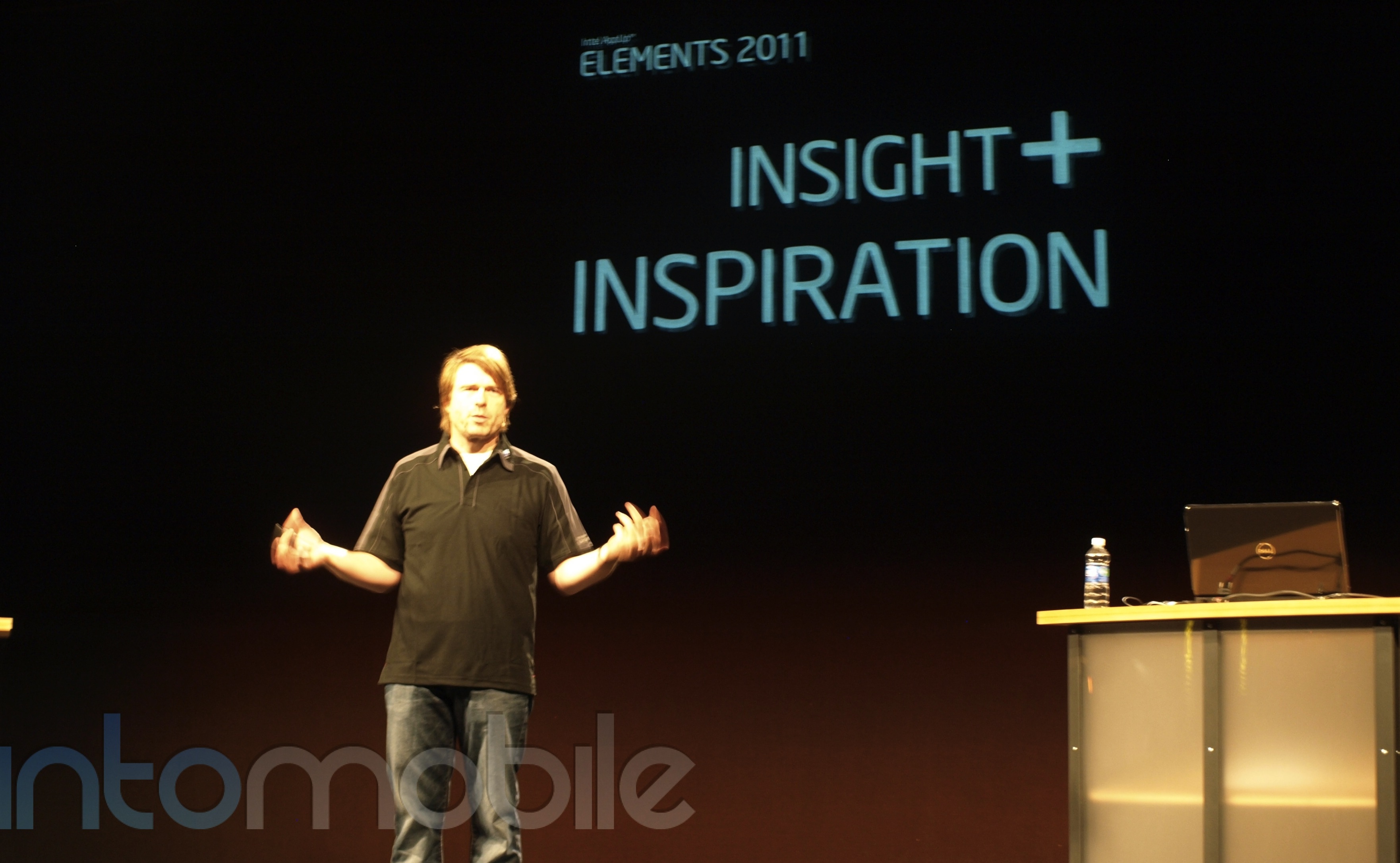
I’m at the Intel AppUp Elements conference (disclosure: Intel paid for my trip) and the company is being quite honest about where it stands in the mobile app space. Specifically, Intel’s Peter Biddle said “We’ve sucked at getting customers.”
For a quick primer, Intel has been powering the vast majority of computing devices for the last twenty years or so, as the WinTel duopoly has been going strong and even the Macs have Intel inside. But the company has been very slow to adapt to a mobile-first world, which has left the door open for companies like ARM, NVIDIA, Qualcomm and others.
Intel’s AppUp program is the company’s attempt to build and foster a developer and app ecosystem and it provides things like in-app billing, virtual file systems and geolocations so developers can focus on doing what they do best: making compelling apps.
The only problem is that Intel hasn’t really had a proper mobile platform to push, which is why it’s not surprising to hear Intel say it has flopped with consumers. As people flock to iOS, Android and even Windows Phone 7, talented app makers want to go to the place where their products have the best chances of being successul. Intel can’t offer that right now.
Previously, Intel was backing MeeGo and the truly open source platform showed a little bit of promise but it always seemed like too little, too late. Even Nokia didn’t feel like the platform itself and the ecosystem were good enough to compete in the modern mobile world and it jumped to Windows Phone. We’ve yet to see a Nokia Windows Phone, so the jury is still out on the decision.
Now, Intel is backing Tizen and it has Samsung helping out. This platform will land on device in the middle of next year and will start on phones and tablets but eventually find its way onto televisions and in-car infotainment centers. We did kind of hear those same promises with MeeGo too and we all know how that one turned out.
I actually like Intel’s vision for its AppUp program, as it envisions a mobile app future where it’s not just big box app stores but rather curated stores from a variety of places. I’m just not sure how well Tizen is going to be received by the market, which is already expecting a lot from its smartphone and tablet operating systems. Hopefully, many of the AppUp elements can be used with Android, which will be optimized for Intel going forward.