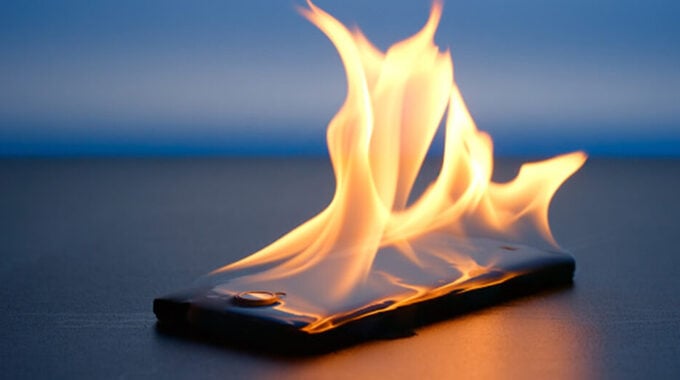
If you’re holding onto your old phone for sentimental reasons or “just in case” scenarios, you might be storing a potential fire hazard. A concerning pattern has emerged among older smartphones that could put your home at risk.
The issue came to light when prominent tech YouTuber Marques Brownlee and his peers noticed something alarming about their collection of old Samsung devices. The batteries in these phones were swelling at rates significantly faster than other manufacturers, though the problem isn’t limited to Samsung devices alone.
This discovery highlights a broader safety concern that affects millions of consumers who keep old devices in drawers and closets. As smartphones become increasingly disposable and upgrade cycles shorten, more people are accumulating potentially dangerous devices without realizing the risks.
A swollen battery represents one of the clearest warning signs that a lithium-ion battery is approaching a critical failure point. Even when powered off, phone batteries continue to drain slowly over time. Eventually, they reach a state of deep discharge where dangerous chemical processes begin.
During extended periods of inactivity, the battery’s electrolytes gradually evaporate. This process creates a buildup of gases including carbon dioxide, carbon monoxide, and hydrogen. As reported by tech experts, these gases create internal pressure that causes the distinctive bulging appearance in affected devices.
The implications extend beyond individual safety concerns. With billions of smartphones sold globally over the past decade, countless devices are stored improperly in homes worldwide. Many consumers remain unaware that their “emergency backup phone” could pose a serious fire risk.
If you haven’t checked on your stored devices recently, now is the time to inspect them for signs of battery swelling. The safest approach for devices you’ll never use again is to sell them while they still have value or take them to proper recycling facilities.
For phones showing no signs of swelling, proper storage techniques can prevent future problems:
- Charge the battery to approximately 50% capacity
- Power down the device completely
- Store in a cool, dry location away from heat sources
- Repeat this process every six months to prevent deep discharge
Devices with removable batteries offer additional safety options. After following the charging and power-down steps, store the phone and battery separately. This separation slows the self-discharge rate since internal components won’t draw power for background processes.
If you discover a swollen battery, avoid charging the device under any circumstances. For phones with built-in batteries, power off immediately and contact a professional repair technician who can safely handle the device. Never attempt DIY repairs on swollen batteries.
For removable batteries, you can extract them yourself but proper disposal is crucial. The Environmental Protection Agency recommends taping over battery terminals, placing the battery in a plastic bag, and taking it to a certified recycling center for hazardous waste. Never throw old batteries in regular trash.
This issue reflects broader challenges in consumer electronics safety as devices become more complex and disposal practices lag behind innovation. The tech industry’s rapid upgrade cycles create situations where safety information doesn’t reach consumers who assume old devices are harmless when stored.