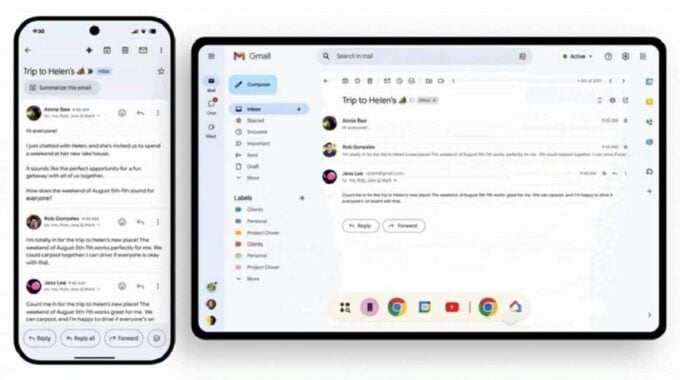
Google is preparing to challenge Apple’s ecosystem dominance with a new feature called “Continue On” in Android 17. The functionality works much like Apple’s Handoff feature, allowing users to start a task on their Android phone and pick up exactly where they left off on a compatible tablet.
The move represents Google’s most direct attempt yet to create the seamless cross-device experience that has long been one of Apple’s key advantages. As smartphone innovation slows and manufacturers look for new ways to retain users, ecosystem integration has become a critical battleground.
Google revealed that Continue On has been designed to work in both directions, though the initial release only supports tasks moving from smartphones to tablets. Android tablet users will see a “Continue On” icon in their dock, showing the most recently used app from their phone – provided that app is also installed on the tablet.
The feature covers a wide range of use cases. Users can jump directly into documents they were editing, resume emails they had just opened, or continue browsing sessions. In some cases, the feature will open the tablet’s browser to the relevant webpage to maintain continuity across different apps.
This represents a significant shift in Google’s approach to Android. While the company has previously focused on cloud-based continuity through services like Chrome sync, Continue On creates direct device-to-device handoffs that feel more immediate and intuitive.
The feature will debut in Android 17’s EC1 build, which is the first release candidate version. However, Google hasn’t provided specific timing for when this build will arrive or when the promised tablet-to-phone handoff support will be added. Setup requires nothing more than signing into the same Google account on both devices.
Continue On fits into Google’s broader push toward better Android ecosystem integration. The company recently announced a new lineup of laptops and has been working to improve how Android devices work together. This effort directly challenges Apple’s ecosystem, where features like Handoff, AirDrop, and Universal Clipboard create sticky user experiences that make it harder to switch platforms.
The timing is crucial for Google. As the smartphone market matures and upgrade cycles lengthen, keeping users within a single ecosystem becomes more important than ever. Apple has successfully used ecosystem lock-in to maintain premium pricing and customer loyalty, even when individual Android devices might offer better specifications or value.
For Android users, Continue On could finally deliver the seamless multi-device experience they’ve been missing. The feature works automatically in the background, requiring no manual setup beyond using the same Google account across devices. This simplicity could be key to widespread adoption.
The success of Continue On will likely depend on app developer support and how well it works across Google’s fragmented Android ecosystem. Unlike Apple, which controls both hardware and software, Google must ensure the feature works reliably across devices from dozens of manufacturers with varying Android implementations.