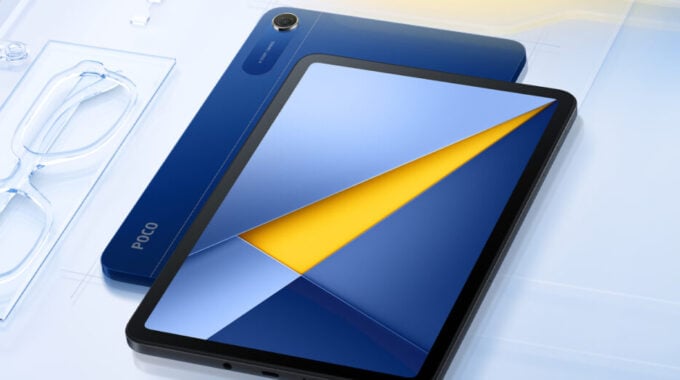
Xiaomi has quietly launched the Poco Pad C1 on its global website, confirming a worldwide release for its latest budget tablet. The device packs a 9.7-inch 120Hz display, Snapdragon 6s 4G Gen 2 processor, 6GB RAM, and 128GB storage, all running HyperOS 3 out of the box.
The tablet first surfaced in April before gaining FCC approval in the US earlier this month. Now it’s officially part of Xiaomi’s global lineup, available in blue and black color options. The timing aligns with Xiaomi’s recent European launch of the Redmi Pad 9.7, suggesting the company is pushing hard into the affordable tablet space.
The Poco Pad C1 is essentially a rebranded Redmi Pad 2 9.7, following the same strategy Xiaomi used with the Poco Pad M1 and Redmi Pad 2 Pro. This approach lets Xiaomi target different market segments with identical hardware under separate brands. The Poco brand typically focuses on value-conscious consumers who want decent specs without premium pricing.
Key specifications include:
- 9.7-inch IPS display with 120Hz refresh rate
- Snapdragon 6s 4G Gen 2 chipset
- 6GB LPDDR4X RAM and 128GB UFS 2.2 storage
- 7,600mAh battery with 18W wired charging
- Dimensions: 226.51 x 147.97 x 7.4mm, weighing 406g
- Dual cameras with relatively modest resolution
- HyperOS 3 pre-installed
The tablet’s 120Hz display stands out in the budget segment, where most competitors still offer 60Hz panels. This higher refresh rate should provide smoother scrolling and better responsiveness for gaming and media consumption. The 7,600mAh battery capacity also suggests solid all-day usage, though the 18W charging speed is fairly standard for this price tier.
Xiaomi hasn’t revealed pricing yet, but given the Poco brand’s value positioning, expect competitive pricing compared to similar Android tablets. The global launch indicates Xiaomi sees strong demand for affordable tablets with premium features like high refresh rate displays. This move also helps Xiaomi compete against brands like Lenovo and Samsung in the budget tablet space, where margins are thin but volumes can be substantial.
The launch comes as the tablet market shows renewed growth, driven partly by remote work trends and demand for larger screens for entertainment. Budget tablets with decent specs fill a gap between expensive iPads and cheap, low-quality Android alternatives.