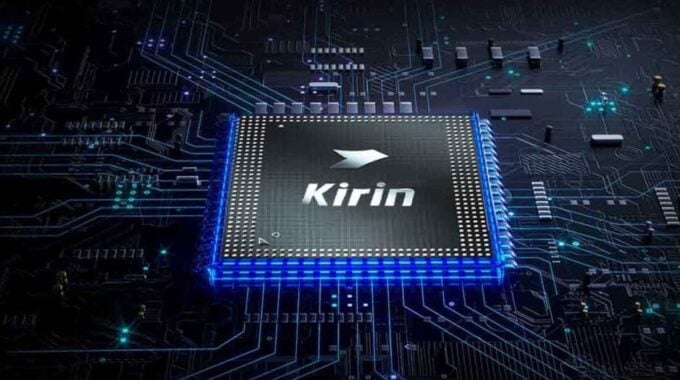
Huawei is pushing its chip technology closer to industry-leading 3nm processors with the upcoming Mate 90 series, signaling another major step in the company’s semiconductor recovery. The Chinese tech giant revealed details about its new chip architecture at the 2026 Phoenix Bay Area Finance Forum in Shenzhen.
The announcement comes as Huawei continues to advance its in-house chip capabilities despite ongoing US trade restrictions. The company’s ability to develop processors that compete with cutting-edge manufacturing processes represents a significant milestone for China’s semiconductor industry.
Zheng Jun, CTO of Huawei’s Financial System Department, explained that the company’s new 2026 Kirin mobile chip will power the Mate 90 series with performance levels approaching devices running true 3nm processors. The chip is built using Huawei’s proprietary Tao Scaling Law and LogicFolding design principles.
“Chips developing based on Tao Law have been applied to the Huawei Mate 90 model, achieving a top-tier process level close to 3nm,” Zheng said during his keynote presentation.
The Tao Scaling Law represents Huawei’s alternative approach to traditional chip scaling methods used by industry leaders like TSMC and Samsung. Rather than relying purely on manufacturing node shrinks, Huawei’s method focuses on architectural improvements and design optimization to achieve similar performance gains.
The upcoming Kirin processor promises substantial improvements over previous generations:
- 53.5% increase in transistor density
- 41% improvement in performance and energy efficiency
- 12.7% boost in peak frequency
- Transistor density reaching 238 million per square millimeter
These specifications matter because they show Huawei can compete with flagship processors from Qualcomm and MediaTek without access to the most advanced manufacturing nodes. The company has been cut off from TSMC’s leading-edge processes since 2020 due to US sanctions.
Huawei’s chip progress has broader implications for the global semiconductor industry. The company’s ability to develop competitive processors using alternative methods could reduce dependence on traditional foundries and potentially reshape how the industry approaches chip design.
The timing is also significant as other Chinese companies work to build domestic semiconductor capabilities. Success with the Mate 90’s processor could boost confidence in China’s chip industry and potentially influence other manufacturers to explore similar design approaches.
While Huawei hasn’t disclosed which foundry will manufacture the new Kirin chips, the company has previously worked with Chinese semiconductor manufacturer SMIC. The specific name for the 2026 Kirin processor remains unclear, though more details are expected as the Mate 90 launch approaches.
The move also positions Huawei to compete more effectively in premium smartphone markets where processor performance directly impacts user experience and buying decisions. Strong chip performance has become essential for features like AI processing, gaming, and computational photography that high-end phone buyers expect.