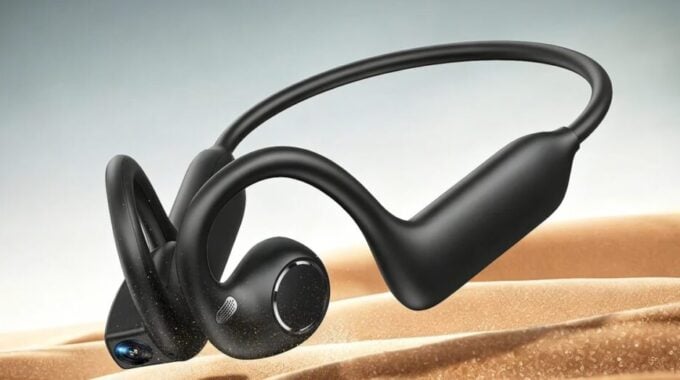
Camera-equipped headphones are no longer a curiosity. In the span of a few months, the idea has gone from a niche concept to something real companies are building and selling. Razer showed off Project Motoko at CES 2026, VibeLens put its MusicCam on Kickstarter, and Apple is reportedly working on camera-equipped AirPods. Now Rollme is joining the group with the AirCam, and it has one clear advantage over the competition: price.
The AirCam is listed at $79.99, which is well below anything else in this space. That alone makes it worth paying attention to, even before you look at what you actually get for the money. According to Digital Trends, the headset packs in a surprising amount of hardware at that price point.
The broader context here matters. Wearable cameras have been tried before, most famously with Google Glass, and they failed badly. But the form factor has shifted. Putting a camera inside a device people already wear for audio removes a lot of the social awkwardness that killed earlier products. It also opens up hands-free capture for people who want it without carrying a separate device. That shift in thinking is what makes this category worth watching.
On the hardware side, the AirCam is an open-ear bone conduction headset. The camera is 8 MP and shoots 1080p video at 30fps with electronic image stabilization. It saves footage to 8 GB of internal storage, which is enough for a reasonable amount of clips. A few things to know about how it works:
- Each video clip is capped at 10 minutes, so longer recordings require multiple sessions
- Photos and video transfer over Wi-Fi 6, not Bluetooth
- Touch controls handle everything: one tap for a photo, two taps to start video, three taps for audio recording
- There is also onboard AI that can identify objects in real time and handle live translation
The real-time translation feature is worth singling out. It is a genuinely practical tool for travelers or anyone regularly working across languages, and it is the kind of feature that could make a wearable camera actually useful rather than just novel. Whether the AI performs well in practice is something that will need hands-on testing to confirm.
For audio, the AirCam has 16 mm Hi-Fi drivers, dual noise-canceling mics for calls, and a 220 mAh battery rated for 10 hours of music or calls and 120 hours on standby. Those are solid numbers for a device this small and this affordable.
The closest competitor is the VibeLens MusicCam, which sells on Amazon for around $129. The MusicCam uses a rotating Sony sensor, records in 2K, has six-axis stabilization, and supports up to 2.6 hours of continuous video recording. On paper, it is the better camera product. The AirCam’s 8 MP sensor, 1080p cap, and 10-minute clip limit reflect the $50 price difference.
But not everyone needs a 2K rotating Sony sensor in their headphones. For someone who wants an affordable entry point into this product category, or who just wants hands-free snapshots and basic video, the AirCam makes a reasonable case for itself. The price is low enough that the bar for disappointment is also lower. If Rollme can deliver consistent audio quality and a camera that actually works in decent lighting, the AirCam could find a real audience.