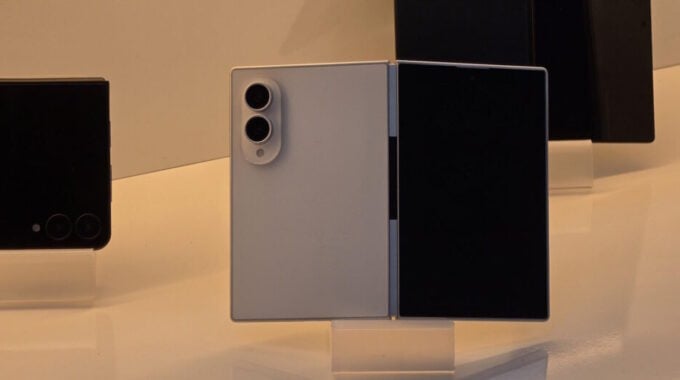
Samsung is gearing up for its Galaxy Unpacked event on July 22, and the production numbers leaking out ahead of the show tell an interesting story. The company appears to have more confidence in the standard Galaxy Z Fold 8 than in its own flagship Ultra model, which is not the order you might expect.
According to Android Authority, citing a report from ET News based on industry sources, Samsung has set production volumes for its upcoming foldable lineup as follows:
- Galaxy Z Fold 8: 2.8 million units
- Galaxy Z Fold 8 Ultra: 2 million units
- Galaxy Z Flip 8: 1.5 million units
What makes this notable is the shift in Samsung’s own expectations. The company originally planned similar production volumes for both the Z Fold 8 and the Z Fold 8 Ultra. That changed. Samsung now expects to move significantly more of the standard Fold 8, which uses a wider 4:3 aspect ratio screen.
That 4:3 ratio is becoming a serious talking point in the foldable phone market. Apple is widely expected to launch its first foldable iPhone later this year using the same aspect ratio. An industry insider quoted in the ET News report said the 4:3 format “is effectively being accepted as the market standard” for foldables. If that holds, Samsung’s early push into that format with the Fold 8 could give it an edge as competition in the category heats up.
Both the Z Fold 8 and Z Fold 8 Ultra are expected to run on the Snapdragon 8 Elite Gen 5 for Galaxy chip. The Z Flip 8 is a different story. Depending on the region, it could ship with either a Snapdragon processor or Samsung’s own Exynos 2600. That kind of split has been a recurring pattern for Samsung and tends to frustrate buyers in markets that end up with the less favored chip.
Pricing is also expected to go up across the board. The likely reason is the ongoing RAM shortage, which has pushed component costs higher for manufacturers. That creates a real tension for Samsung. Higher prices on foldables, which are already expensive compared to standard smartphones, risk shrinking the pool of buyers. The fact that Samsung still revised its Fold 8 production numbers upward suggests the company believes demand will hold despite the price increase.
The broader context here matters. Foldables have been a slow-burn category for years. They’ve attracted tech enthusiasts but struggled to break into mainstream buying habits. A clearer industry consensus on form factor, like settling on 4:3 as the standard, could make foldables easier to market and easier for app developers to optimize for. That kind of standardization tends to accelerate adoption across a whole product category, not just for one brand.
Samsung will officially show off the Galaxy Z Fold 8, Z Fold 8 Ultra, and Z Flip 8 at Unpacked on July 22. At this point, very little about these phones remains a mystery ahead of the announcement.