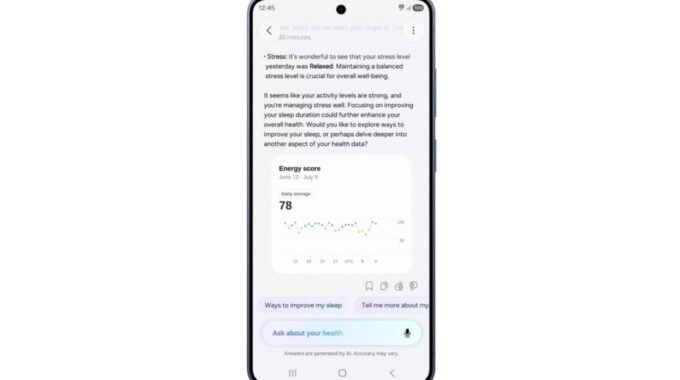
Samsung is making a push into AI-powered health coaching. The company has started rolling out a chatbot called Health Assistant, built directly into the Samsung Health app, and it is now available in beta for eligible users in the US. The timing is deliberate: the launch comes just days before Samsung’s Galaxy Unpacked event, where new smartwatches are widely expected to appear.
Health Assistant is designed to help people actually understand what their health data means, not just collect it. Anyone who has ever opened a fitness app and stared blankly at a resting heart rate graph knows the gap between data and understanding is real. Samsung is trying to close that gap with a conversational tool that can answer questions about your metrics and suggest lifestyle changes based on what it finds.
What makes this more than a standard AI chatbot, at least on paper, is how much data it can pull together. As reported by Engadget, Health Assistant can draw from a Galaxy phone, a Galaxy Ring, and a Galaxy Watch, covering what Samsung calls its five core pillars of wellness:
- Sleep
- Activity
- Nutrition
- Mindfulness
- Vitals
The chatbot is opt-in and will explain how these areas affect each other. For example, it might connect poor sleep data to low activity levels the following day, giving users a more complete picture rather than isolated numbers.
The most interesting angle here is the broader ecosystem integration. Samsung’s competitors in this space, Whoop and Fitbit among them, are mostly limited to what their wearables pick up. Health Assistant ties into Samsung’s personalized data engine, which means it can also read signals from your calendar and smart home devices. If your smart lights stayed on until 1 a.m., the chatbot might flag that as a possible factor in your restless night. Samsung says future updates will go further, with features like suggesting breathing exercises before a calendar event tagged as a work meeting.
Samsung was careful to draw a clear line around what the tool will not do. It will not offer medical advice, recommend treatments, or diagnose conditions. Recommendations have been reviewed by physicians and certified health coaches, the company says, but this is a wellness guide, not a clinical tool.
That said, Samsung is also working on features that do move closer to clinical territory. The company told Bloomberg it is building a platform that would let physicians access smartwatch data and track metrics like blood pressure between appointments. That effort follows Samsung’s acquisition of Xealth, a company that connects wearable data with clinical records. It is a significant step, though one that will likely take time to reach most users given the regulatory and healthcare system hurdles involved.
On the consumer side, the update also brings a handful of new tracking scores to Samsung Health:
- Energy Score, which gives a daily snapshot of your readiness
- Heart Health Score, based on ongoing cardiovascular metrics
- Fitness Index, which factors in activity, heart rate, and oxygen consumption to track progress over time
There is also a new sleep monitoring feature that watches for significant shifts in heart rate and blood oxygen levels overnight, then alerts you if something looks off. Apple Watch has offered similar overnight monitoring for a couple of years, so Samsung is catching up on that front rather than breaking new ground.
The broader context matters here. Wearable health tracking has been growing fast, but the industry’s biggest unsolved problem has always been turning raw data into something useful for ordinary people. AI chatbots are now the obvious tool for that job, and every major player in the space is working on some version of it. Samsung’s edge, if it has one, is the size of its ecosystem. Hundreds of millions of people already use Samsung phones, and a meaningful share of them own Galaxy wearables. If Health Assistant works as described, it has a large built-in audience to reach.