Scrolling through photos is about to get 90 percent faster on your Xiaomi phone. That’s not a headline spec for a new device, that’s a software update, and it tells you a lot about how seriously Xiaomi is taking HyperOS 4. As reported by 91Mobiles, Xiaomi has officially announced HyperOS 4 for China, with beta rollouts kicking off August 14th. Global availability comes later, but the bones of what’s coming are already clear.
A glass makeover that actually looks good
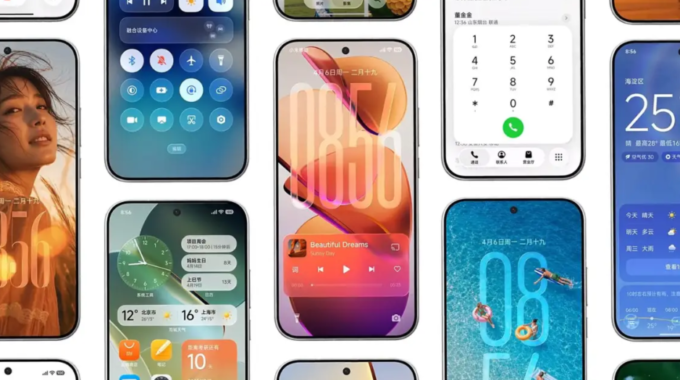
The headline visual change in HyperOS 4 is what Xiaomi calls “Soft Light Glass” aesthetics. Think translucent surfaces, soft lighting effects, and a frosted look across quick settings, menus, widgets, and folder backgrounds. Yes, it looks like Apple borrowed from it, or maybe Xiaomi borrowed from Apple’s iOS 26. Either way, the execution here looks genuinely polished rather than like a cheap copy.
The lock screen finally lets you resize the clock, which sounds minor but has been a long time coming. Stacked notifications are also new to HyperOS 4, a style we’ve already seen on ColorOS 16 and OriginOS 6. And the Integrated Device Centre gets a fresh layout with a one-tap option to switch between multiple home screen setups. Across first-party apps like Phone and Gallery, there are also loads of subtle animation tweaks and blur improvements that add up to a noticeably cleaner feel.
Real performance numbers, not just marketing talk
Xiaomi says HyperOS 4 runs on less memory than HyperOS 3, and the company has redesigned the app runtime environment to make system apps more efficient. In internal testing, opening 30 apps back to back after extended use was 17.5 percent faster, and frame drops during long sessions dropped by 28.9 percent. Battery endurance across tasks has also improved over the previous version.
So these aren’t just cosmetic changes. The under-the-hood work looks meaningful, and if the real-world experience comes close to those test numbers, everyday use should feel noticeably smoother.
AI features that go beyond the gimmicky stuff
The AI additions in HyperOS 4 are actually useful, at least on paper. The Recorder app can now build intelligent outlines, highlight key points, and skip silent sections automatically. The Super XiaoAI Input Method adds structured voice-to-text and real-time voice translation. AI Voice Notes lets you drop images into notes and pull out key conclusions automatically.
Worth flagging: most of these AI features are China-specific for now. The global HyperOS 4 ROM will likely arrive without some of them. Still, the non-AI features, the design changes, performance improvements, and battery gains, should make the cut worldwide.
Which devices are getting HyperOS 4, and when
Xiaomi is rolling out the beta in three batches. Here’s the full list:
- August 14th: Xiaomi 17 Ultra, Xiaomi 17 Ultra Leica Edition, Xiaomi 17 Pro Max, Xiaomi 17 Pro, Xiaomi 17, Redmi K90 Pro Max, Redmi K90 Pro Max Champion Edition, Redmi K90, Xiaomi Pad 8 Pro, Xiaomi Pad 8
- August 27th: Xiaomi 17 Max, Xiaomi 17T Pro, Xiaomi 17T, Xiaomi 15 Ultra, Xiaomi 15 Ultra Dual Satellite Edition, Xiaomi 15S Pro, Xiaomi 15 Pro, Xiaomi 15, Redmi K90 Max, Redmi K90 Supreme Edition, Redmi K Pad 2
- September 17th: Redmi K100 Pro Max, Redmi K100 Pro, Redmi K80 Pro, Redmi K80 Supreme Edition, Redmi K80, Xiaomi MIX Flip 2, Xiaomi Pad 7 Ultra, Xiaomi Pad 7S Pro 12.5
The rollout covers a wide range of devices, which is good to see. And with Motorola already pushing out Android 17 eligibility lists, and OPPO, OnePlus, and Realme recruiting testers for ColorOS 17, the Android 17 era is clearly in full swing. Xiaomi jumping in now makes sense, and HyperOS 4 looks like one of the more thoughtful updates we’ve seen from the brand in a while. The global announcement can’t come soon enough.