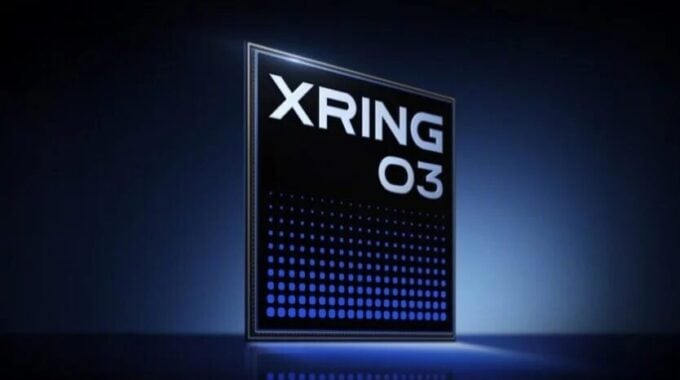
A 55% multi-core jump over your last chip is not something you see every day. Xiaomi’s new Xring O3 just showed up in early benchmark tests, and the numbers are genuinely hard to ignore, especially when you consider that Qualcomm and Apple are still the names people expect to dominate this space.
According to Gizmochina, the Xring O3 was tested by Chinese outlet Xiaobai’s Tech Reviews on what appears to be a reference design. In Geekbench single-core, it scored 3,854, which puts it roughly in the same territory as the Snapdragon 8 Elite Gen 5 and Apple’s A19 Pro. That alone would be impressive. But the multi-core result is where things get interesting.
The chip’s 10-core CPU posted 15,086 in Geekbench multi-core. For context, the best Snapdragon 8 Elite Gen 5 scores on devices like the iQOO 15 Ultra stayed under 12,000. So Xiaomi’s chip isn’t just competitive, it’s clearly ahead in this specific test. And it’s doing it while being more power-efficient than Qualcomm’s current flagship silicon, which matters a lot for real-world battery life.
Graphics tell the same story. In 3DMark’s Steel Nomad Light test, the Xring O3 came in more than 40% ahead of current flagship chipsets and up to 90% ahead of the original Xring O1. The performance-per-watt gains are real, not just raw speed improvements slapped on top of higher power draw.
Here’s the part that makes this even more interesting. The Xring O3 is built on TSMC’s N3P process, not the newer N2 node that Qualcomm, Apple, and MediaTek are all expected to use for their next chips. So Xiaomi is competing at this level on an older manufacturing process. That’s a strong signal about how much the company has improved its chip design chops since the Xring O1.
Xiaomi has confirmed the Xring O3 will power the Xiaomi 18 Fold and the Pad 9 Pro Max, so these numbers will eventually face real-world scrutiny. And that’s the honest caveat here. Benchmark results from prototype or reference hardware can reflect ideal conditions that shipping devices don’t always match. Cooling, sustained power limits, and software tuning all shape what users actually experience day to day.
Still, for a company that was essentially a chipmaking newcomer not long ago, these results show Xiaomi is building something worth taking seriously.