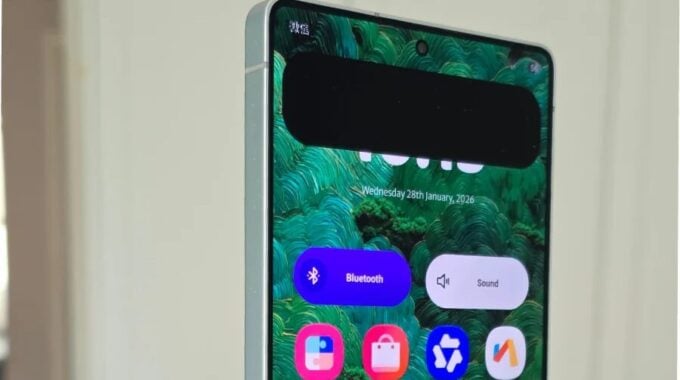
Samsung had a rare moment of genuine hardware innovation with the Galaxy S26 Ultra’s privacy screen. Now it looks like Xiaomi wants a piece of that. Screenshots shared on X show a feature called “Smart Privacy Display” in what appears to be an early build of Xiaomi’s software, and honestly, it looks more thoughtfully designed than you might expect from a fast follow.
According to Gizmochina, the feature is not just a simple toggle. Xiaomi is building in a group-based system that lets you assign specific apps to custom profiles, so you control exactly which apps trigger the privacy mode and which ones don’t. There’s also an automatic mode that kicks in on sensitive screens like password fields, banking apps, and messaging threads, without you touching a setting. That’s a genuinely useful addition. Samsung’s version works great, but this level of per-app granularity could make Xiaomi’s implementation more practical for everyday use.
The screenshots line up with rumors from June that suggested Xiaomi was working on this kind of display feature for its next flagship lineup. Nothing is confirmed officially yet, but leaked UI elements showing real interface logic tend to be more credible than vague supply chain whispers. This looks like something that is close to being ready.
The phones expected to carry this feature are the Xiaomi 18 Pro and Pro Max, both rumored for a September launch. They are also tipped to run on Qualcomm’s Snapdragon 8 Elite Gen 6 Pro chipset, which would make them among the first devices on that platform. The two phones are expected to keep the rear display setup from their predecessors, though there are suggestions Xiaomi might go bigger with those secondary screens this time around.
The big open question is how Xiaomi is pulling this off at the hardware level. Samsung’s Galaxy S26 Ultra uses a specialized display panel that physically narrows the viewing angle, which is a proper hardware solution. It’s not software dimming or a stuck-on filter. If Xiaomi is doing something similar, that’s impressive and adds real cost and engineering complexity to the device. If it’s more of a software trick, the experience could fall short of what Samsung delivers. That distinction matters a lot.
Here’s what the leaked feature is reported to include:
- Custom app groups that determine which apps trigger privacy mode
- Automatic mode for sensitive screens like banking apps, passwords, and messages
- A manual toggle for on-demand privacy control
The broader context here is worth paying attention to. Privacy features have mostly lived in software for years, buried in settings menus most people never touch. Samsung moving it to the hardware layer was a signal that consumers actually want physical privacy protection, not just digital. If Xiaomi ships this on the 18 Pro series and prices it competitively, it puts pressure on every other Android manufacturer to catch up. That’s good for everyone who has ever had someone read their screen on public transit.
So keep an eye on September. If the Xiaomi 18 Pro lands with a fully functional smart privacy display, it could shift what people expect from a flagship phone in 2026.