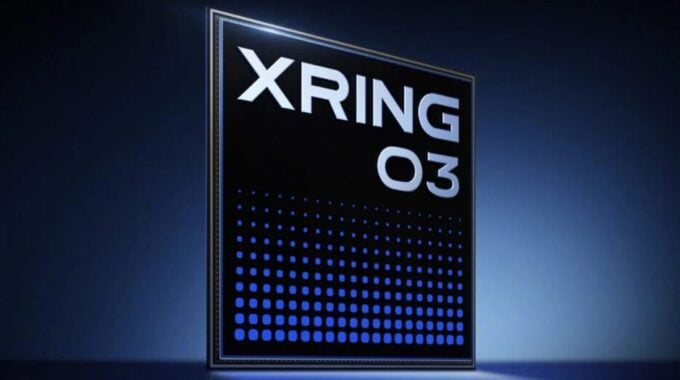
Thirty percent. That’s how much faster Xiaomi’s new Xring O3 chip scored against the Snapdragon 8 Elite Gen 5 in multi-core testing. For a company that only recently got serious about making its own silicon, that’s a number worth paying attention to.
According to Android Headlines, a Geekbench 6 listing for a device with model number M367FC has surfaced online, tipping out as the Xiaomi Pad 9 Pro Max. The listing was spotted by tipsters Ice Universe and ZionsAnvin on X, and it confirms that this upcoming flagship tablet runs on Xiaomi’s custom Xring O3 processor, paired with 16GB of RAM and Android 17 out of the box.
The Xring O3 is a 10-core chip, which is already an interesting move. The layout breaks down into two performance cores running at 4.36GHz, four cores at 3.69GHz, and four efficiency cores at 3.15GHz. Graphics are handled by a Mali-G2-Ultra-NX MC16 GPU. In Geekbench 6, the Pad 9 Pro Max hit a single-core score of around 3,500 and a multi-core score north of 13,000. Compare that to last year’s Pad 7S Pro and its older Xring O1 chip, and the gap is significant.
But the multi-core result is what makes this interesting. The single-core score roughly matches the Snapdragon 8 Elite Gen 5 found in the Lenovo Legion Tab Gen 5, which is a proper gaming tablet. So on raw single-thread performance, Xiaomi is competitive with Qualcomm’s best. And then in multi-threaded workloads, the Xring O3 pulls ahead by over 30%. That kind of efficiency at scale is not easy to design, and it suggests Xiaomi’s chip team has matured considerably since the original Xring debut.
This matters beyond just a benchmark number. Qualcomm has had a near-stranglehold on Android’s premium tier for years. Apple designs its own chips and dominates the tablet space partly because of that control. Xiaomi building competitive silicon is a sign that more Android manufacturers could follow a similar path, which is good for competition and eventually good for consumers. Samsung has its Exynos line, but it has been inconsistent. If Xiaomi keeps improving at this rate, it becomes a real pressure point on Qualcomm’s pricing and roadmap.
As for the rest of the Pad 9 Pro Max’s specs, early reports paint a big, capable tablet. We’re talking a 13.3-inch display, which puts it firmly in laptop-replacement territory for anyone who lives in split-screen mode or streams a lot of content. The battery is expected to exceed 10,000mAh with 120W wired fast charging, so filling that thing back up shouldn’t take long.
The Pad 9 Pro Max won’t be the only new tablet in the lineup. Xiaomi is reportedly planning a full Pad 9 family for China in September, including a standard Pad 9 with an 11.2-inch screen and a mid-range Pad 9 Pro with a 12.5-inch panel. So there should be options at different price points, though Xiaomi hasn’t confirmed pricing or global availability for any of them yet.
Still, with a September China launch locked in and benchmark scores already leaking, we won’t be waiting long to find out if the Xring O3 is the real deal. Based on what we’re seeing, it looks like it is.