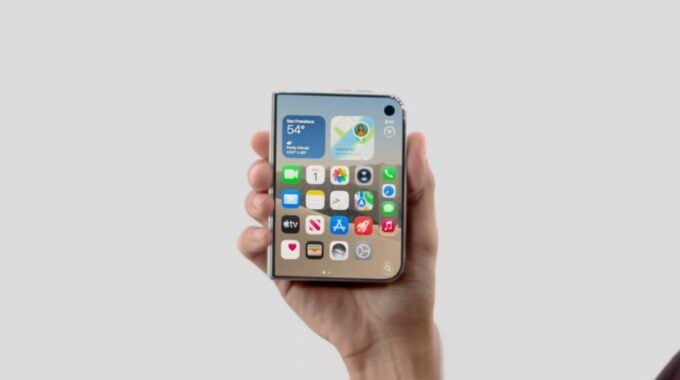
Apple built a fake bezel into its first foldable iPhone. Yes, really. A phone that costs a fortune, with bezels thin enough to make Android rivals nervous, and Apple quietly added a setting that makes them look thicker on purpose. It’s strange, but once you understand why, it actually makes sense.
The feature is called “Shift Left Edge,” and it was spotted by blogger Nicolas Lellouche during hands-on time with the device. As reported by Android Headlines, the setting lives inside the iPhone Duo’s options menu and, when enabled, adds a black border to the left side of the outer cover display. That border is entirely virtual. It pushes content away from the screen edge, essentially doubling the visible bezel on that side.
The official description from Apple explains the purpose: the setting “moves content when you are using a case that partially covers the left edge of the outer display of your iPhone.” So it’s a workaround for cases that physically creep over the screen edge and block part of the display. Rather than leaving users stuck with inaccessible content hidden under a case lip, the software just shifts everything inward.
Here’s where it gets a little puzzling, though. Apple already sells two official accessories for the iPhone Duo: the iPhone Duo Case and the iPhone Duo Folio with Kickstand. Looking at the standard case, it appears to cover all edges of the cover display evenly. If that’s the case, you’d expect any bezel compensation to apply to all sides, not just the left. So either Apple’s own cases don’t actually need this feature, or the implementation is more nuanced than it looks from the outside.
The more likely explanation is that Apple designed this with third-party case makers in mind. Rugged cases, wallet cases, and anything with a more aggressive frame could easily encroach on the left edge of that narrow outer screen. Building a native fix for that problem before it becomes a complaint is smart product thinking, even if it looks odd at first glance.
This is also a small but telling sign of the challenges that come with foldable design. The iPhone Duo’s cover display is compact by nature. Every millimeter matters. When a case eats into that space, the impact on usability is bigger than it would be on a standard full-screen phone. Apple clearly thought about this before launch, which is more than some competitors bothered to do with their early foldable efforts.
The iPhone Duo goes on sale October 23, so real-world testing from buyers using all kinds of cases will reveal pretty quickly whether “Shift Left Edge” is something people actually need or just a quirky option buried in the settings that most users never touch. Either way, it’s a smarter solution than leaving customers to figure it out themselves.