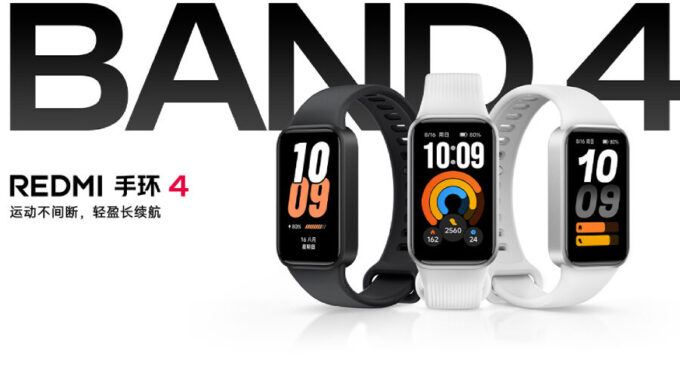
A $25 fitness band with a metal-textured frame and curved glass? That’s the pitch, and honestly, it’s a decent one. Redmi has launched the Redmi Band 4 in China, with sales starting today, and it replaces the Redmi Band 3 from 2024.
The biggest changes are on the outside. The Band 4 uses a unibody design with a metal-textured frame and 2.5D curved cover glass over a 1.47-inch display. That screen refreshes at 60Hz, which is a nice touch on a band this cheap. Scrolling menus on cheap wearables can feel choppy, so smoother motion matters more than the spec sheet suggests. Redmi also added a vertical texture to the strap and reworked the pin-style clasp, so it should stay put during workouts.
Battery is the headline number. Redmi rates the Band 4 at up to 21 days per charge, three days more than the Band 3’s 18. But read the fine print. With regular monitoring turned on, that drops to 8 days. So your real result depends on how many sensors you leave running. Still, even 8 days is respectable, and you won’t be charging this thing every night.
The feature list covers what you’d expect from a budget band:
- All-day stress monitoring
- Heart rate tracking
- Blood oxygen readings
- Sleep tracking
- Women’s health management
- 50 sports modes, including running, cycling, and table tennis
- 5ATM water resistance
You also get message notifications, alarms, and swappable watch faces. In China, it supports WeChat and Alipay QR code payments.
Now the catch. NFC appears to be gone. The Band 3 had it for offline payments in China, and the Band 4 doesn’t mention it anywhere. That’s a real step back for anyone who liked tapping to pay from their wrist. QR payments work, but they’re slower and more awkward. Dropping NFC while raising the price is a tough combination to defend.
On price, the Band 4 costs 169 yuan, about $25. The Band 3 launched at 159 yuan, and the original Redmi Band started at 99 yuan back in 2020. That’s a steady climb over six years. Ten yuan isn’t going to hurt anyone, but the trend is worth watching.
Why does it matter? Cheap bands are where Xiaomi and its sub-brands fight hardest, and they keep pushing the basics: better screens, longer battery, nicer materials. Rivals like Huawei and Honor are doing the same. The Band 4 shows where that race is heading. Design and endurance get the upgrades, while extras like NFC can quietly vanish. It’s a solid refresh for the money, as long as you don’t need to tap and pay.